
01
FUKUSHIMA
Naturalist Declaration
Takahashi Shosaku Sake Brewery
Wataru Takahashi
Pursuing rice field terroir
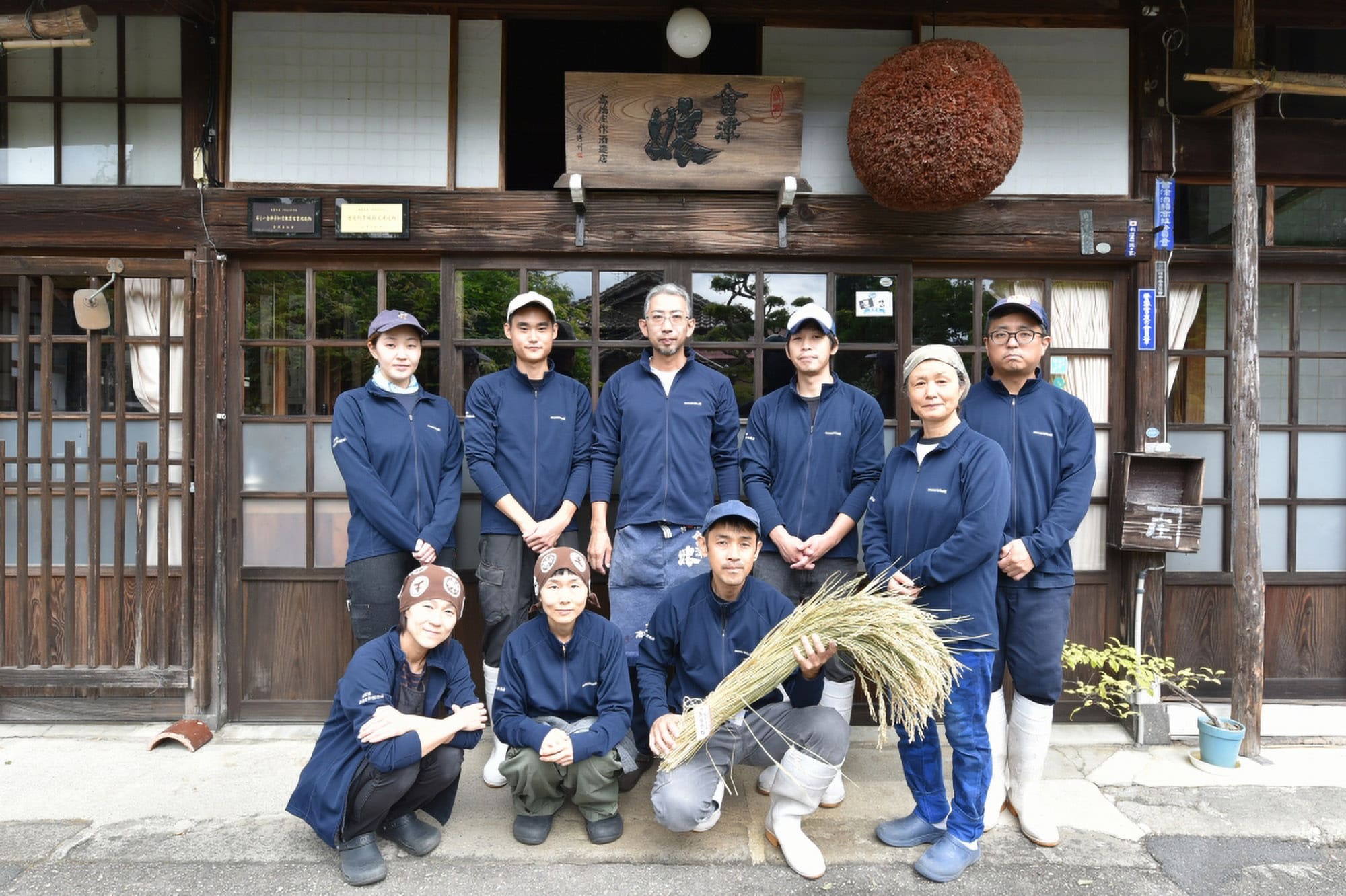
Wataru Takahashi(Kuramoto, Master Brewer)
Born in 1972, Wataru Takahashi graduated from the Department of Fermentation Science at Tokyo University of Agriculture. He honed his skills at "Aji no Machidaya," a specialty sake shop in Tokyo, and at the "Buyu" sake brewery in Ibaraki Prefecture. In 1996, he returned to his family's brewery, Takahashi Shosaku Sake Brewery, to begin his own sake-brewing journey. Guided by the principle of "Dojobutsuho"—brewing with local ingredients using local methods—he embarked on the "Ichiden-ichijo" challenge in 2018: crafting a single sake from a single rice field.
Brewing a Sake from a Single Rice Field
Every rice field possesses its own unique character. Not a single one is the same, from the soil composition to its exposure to sunlight and the way the wind blows through it. What if the "expression of the rice" born from these differences could be fully captured in the quality of the sake?
In 2018, with this vision in mind, Wataru Takahashi of Takahashi Shosaku Sake Brewery began crafting "Junmaishu Aizumusume Jo," a Junmai Ginjo sake made from rice harvested from individual paddies. The small brewery in Aizuwakamatsu City, founded in the early Meiji era, has consistently managed the entire process from growing rice in its own fields to brewing. His father, the fifth-generation kuramoto, had ceased all production of standard-grade sake in 1986 and began to embrace organic rice cultivation.
"At our brewery, everyone is involved in everything from weeding the paddies to bottling the sake. Watching the fields every day, I could clearly feel the individuality of each one. I felt a growing desire to express this in the quality of our sake."
Agriculture and Sake Brewing for the Next Generation
The word "terroir" is French for "land." In the world of wine, where the quality of the grape greatly influences the final product, it is a familiar term. However, expressing the individuality of rice in sake is a far more difficult task. This is because sake is made through a more complex fermentation process, and even when using the same rice, the flavor can vary dramatically depending on the brewer.
Therefore, for "Junmaishu Aizumusume Jo," Takahashi decided to use locally grown Gohyakumangoku sake rice polished to 55% and to standardize numerical values such as the sake meter value (SMV) and alcohol content. Bringing rice with inherently different characteristics to the same goal requires meticulous adjustments, such as water absorption time, making the work more complex. However, Takahashi holds a firm conviction: precisely because these numbers are the same, the distinct expressions of the rice are clearly revealed.
Carrying on the organic cultivation his father began 35 years ago, 20% of the brewery's paddies are now certified Organic JAS. He builds the soil using compost made from fermented and aged sake kasu (lees). A peek at the surface of the paddies in summer reveals medaka (Japanese rice fish) swimming contentedly.
"Organic farming involves a great deal of thought in its interaction with nature, allowing one to fully enjoy the pleasure of growing rice alongside countless lives. Furthermore, I feel that the moromi (fermenting mash) made from organic rice has flexibility and resilience against environmental changes, and possesses the strength to reach its goal on its own. The difference when it becomes sake is the 'density of flavor.' Junmai sake from organic rice has a rich, dense texture."
Agriculture and sake brewing to be passed down to the next generation—Wataru Takahashi's masterful brewing is drawing attention as he ventures into the uncharted territory of "Ichiden-ichijo" (one rice field, one brew).
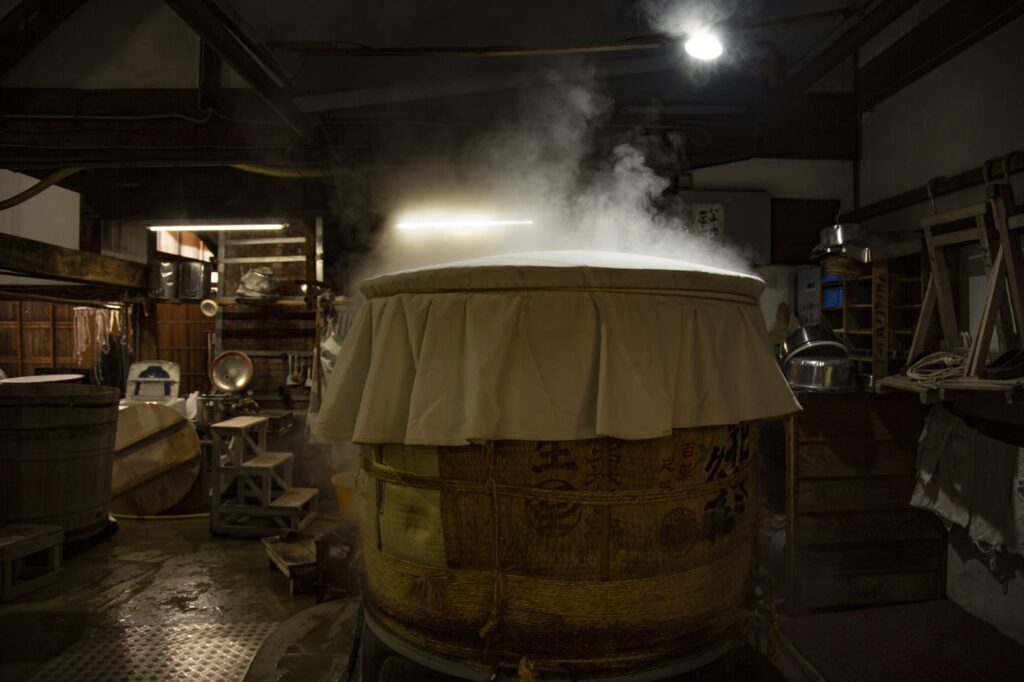
White steam billows from the koshiki (a large vat for steaming rice), causing the cloth cover to swell.
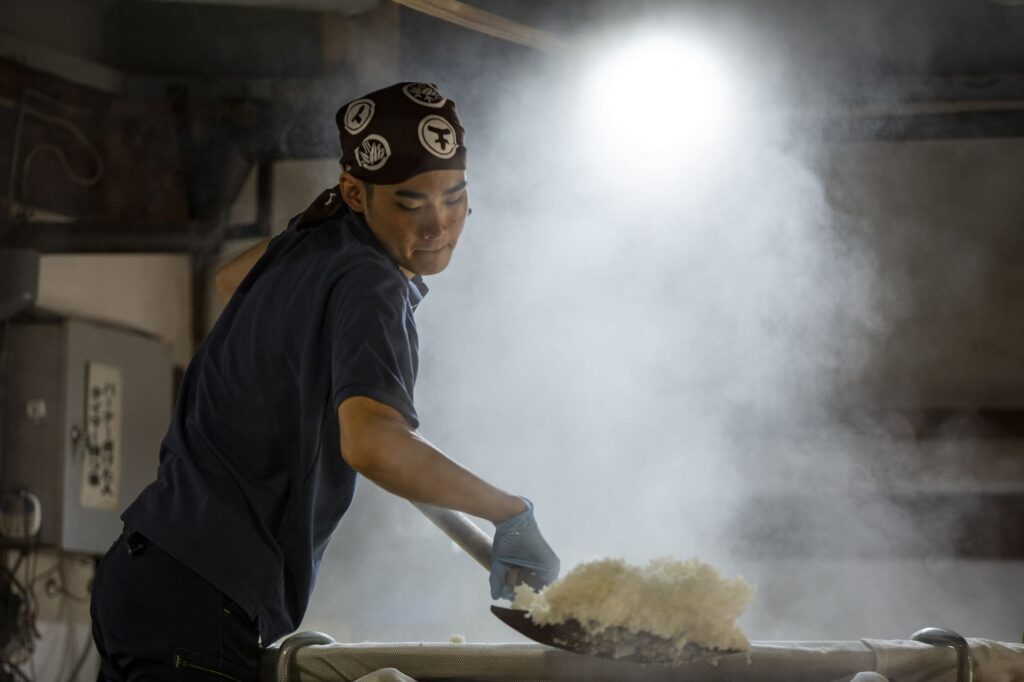
The steamed rice is dug out with a special scoop and moved to a cooling machine. Afterwards, the koji-mai (rice for koji) is wrapped in cloth, shouldered by the kurabito (brewery workers), and carried swiftly up to the koji-muro (koji room) on the second floor. The kakemai (rice for the main mash) goes to the moromi tanks.
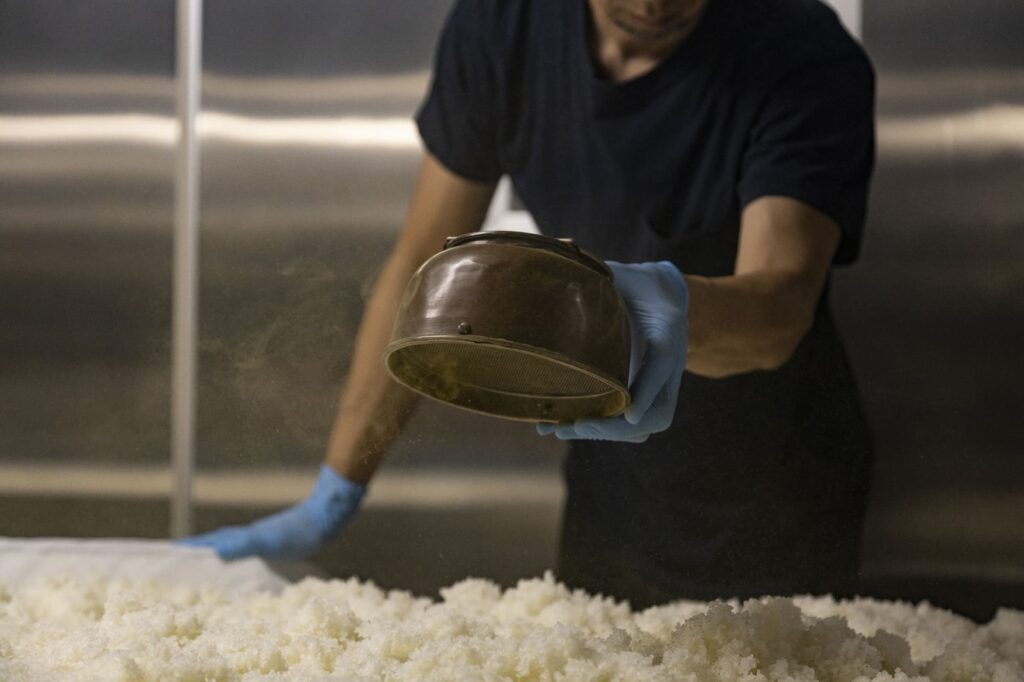
In the koji-muro, a special room for making koji, tane-koji (spores of yellow koji mold) is sprinkled over the steamed rice. The koji-muro is the most pristine place in the brewery, filled with a tense atmosphere.
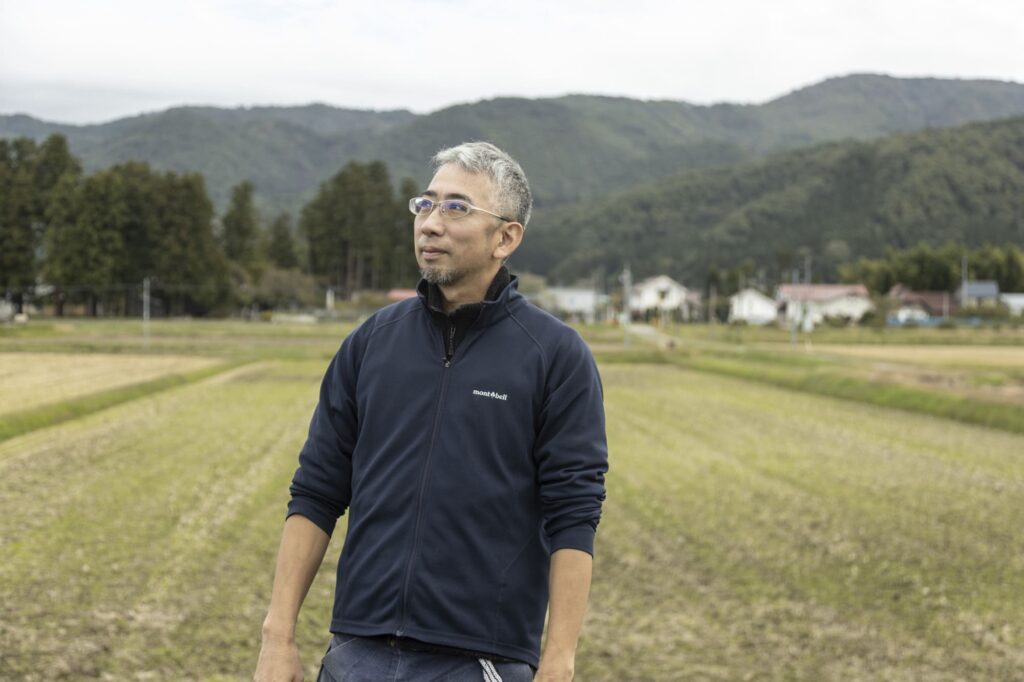
In the brewery's own rice paddies, which spread out before it, approximately 4 hectares are divided into 8 separate fields. Thirty percent of the rice used is from these paddies, while the other seventy percent comes from local contract farmers.
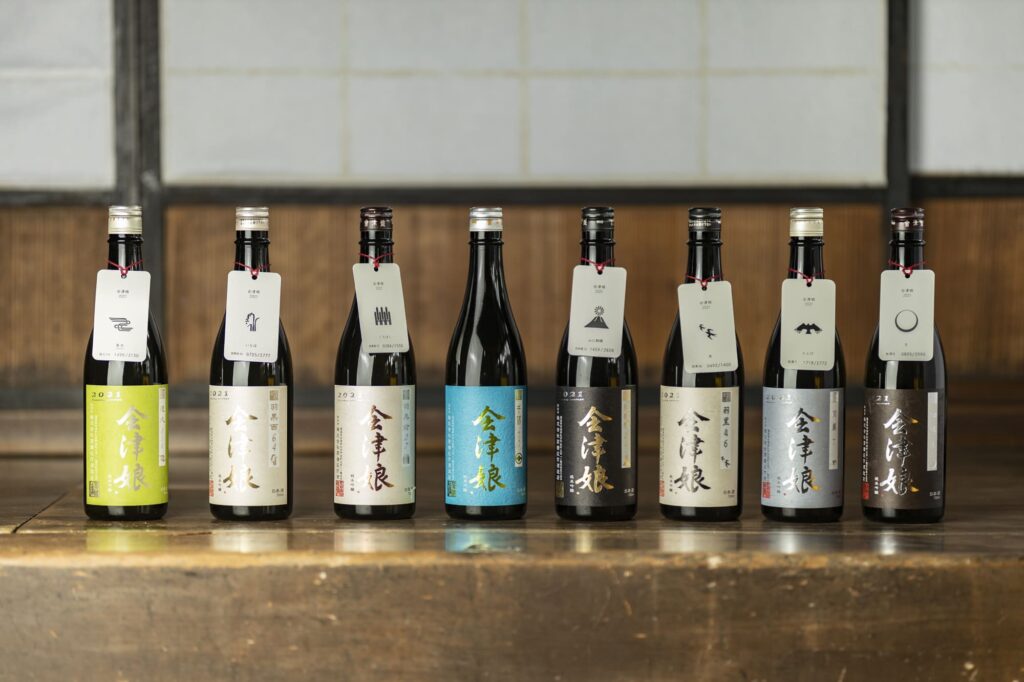
The 'Aizumusume Minori' series, based on the 'Ichiden-Ichijo' concept of 'one brew per rice field.' Each bottle is named after the address of its rice field. From left: 'Tokuhisa 114,' 'Haguro-Nishi 64,' 'Haguromae 27,' 'Nakakari,' 'Hanasaka-Sakai 22,' 'Haguro 46,' 'Haguro 7,' and 'Matsubara 8.'
POINT 01_ Rice Field Terroir: "Ichiden-ichijo"
The flagship product is "Junmaishu Aizumusume Jo," a Junmai Ginjo sake brewed from rice harvested from individual paddies. The names of the sake, such as "Hanasakazakai 22" and "Tokuhisa 114," are the actual addresses of the paddies. By scanning the QR code on the bottle with a smartphone, you can see an aerial photograph of the specific rice field.
POINT 02_ Organic Rice
The brewery's own paddies are spread within a 3-kilometer radius, 20% of which are organically cultivated (grown without pesticides or chemical fertilizers). The soil is enriched using compost made from sake kasu (lees). The remaining 80% is specially cultivated (grown with reduced use of pesticides and chemical fertilizers).
POINT 03_ No Overtime
Employee working hours are from 8:00 AM to 5:00 PM, with basically no overtime. In the summer, they have a five-day work week with weekends and holidays off. Even during the brewing season, they have one day off per week. By using thermal tanks for complete temperature control, work proceeds according to a set plan. The introduction of an automatic koji-making machine, with a system that allows all staff to check the temperature via smartphone, has enabled the stable production of high-quality koji rice and eliminated the need for overnight shifts.
- Name
- Takahashi Shosaku Sake Brewery
- Established
- Circa 1868
- Address
- 755 Higashi, Ichinosekimura, Monden-machi, Aizuwakamatsu-shi
- TEL
- +81-242-27-0108
- Business Hours
- 8:00 AM - 5:00 PM (Closed Saturdays, Sundays, and public holidays)