
01
FUKUSHIMA
Naturalist Declaration
Niidahonke
Yasuhiko Niida
Brewing Sake With Only the Gifts of This Land
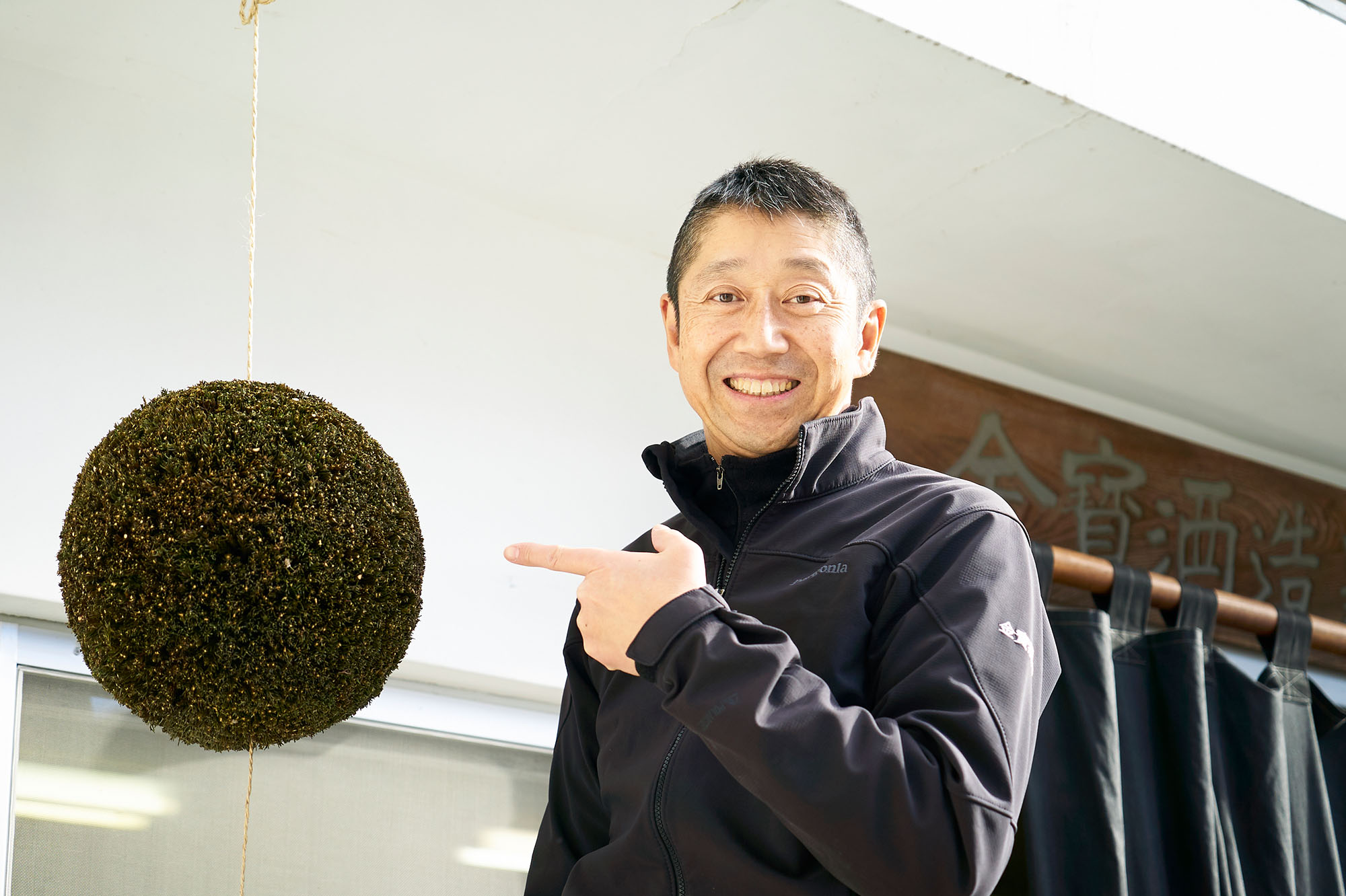
Yasuhiko Niida(18th Generation Head, Toji)
He exclusively brews sake with natural rice using the traditional kimoto method, and personally engages in the natural cultivation of sake rice in the brewery's own paddies. Guided by the mission to "become a sake brewery that protects Japan's rice fields," he is also dedicated to engaging the younger generation.
The Gravity of Inheritance
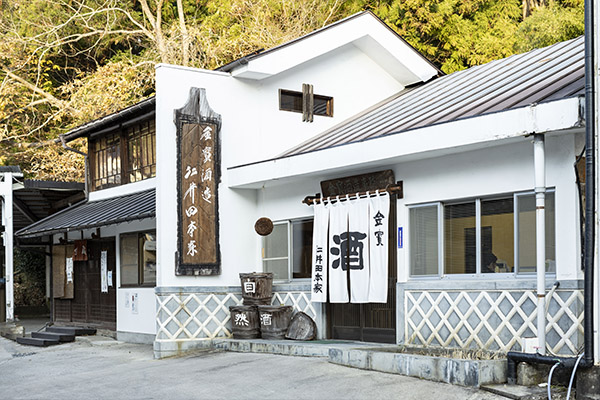
A thirty-minute drive from Koriyama Station, through mountain roads overlooking a patchwork of fields, brings a large sake vat into view, painted with the characters for 'Shizenshu'--natural sake. This is the mark of Niidahonke, founded in 1711 (Shotoku 1). It is a truly 'natural' brewery, crafting its sake from 'natural rice' grown without pesticides or chemical fertilizers, using the town's natural water and yeasts that live within the brewery walls.
The 18th-generation head, Yasuhiko Niida, became the brewery's first-ever owner-brewer in 2010. The flagship brand of Niidahonke, 'Niidashizenshu', is made from this natural rice. It is a sake that was first created in 1967 (Showa 42) by the 17th generation, under the name 'Kinpo Shizenshu'.
For its brewing water, the brewery selectively uses two natural sources depending on the desired quality of the sake: the 'Takenouchi Well Water,' drawn from a well near the company’s own paddies, and the 'Mizunuki Spring Water,' which flows from the company's mountain. Takayuki Naito, the brewery's Sales Director, speaks of this legacy. "This water was left to us by the previous generations."
"The 16th-generation head was not only a brewer but also a forester. He planted and nurtured trees on the mountain, and in doing so, he cultivated this abundant water. Today, all our water needs, from washing rice to cleaning tanks, are met by this natural source. Managing the nearly 100 hectares of mountain to protect this water is a crucial part of our mission."
Even the wooden brewing house in use today was a feat of the 17th generation, who had it relocated from Kitakata City in the Showa 50s (c. 1975-1984). The Niidahonke of today exists only because each generation of family heads embraced challenges, always thinking of the future and of the community as a whole.
The Dream: A Completely Self-Sufficient Brewery
In 2003, the 18th-generation head, Yasuhiko, began cultivating rice himself through natural methods, aspiring to pass on even one more healthy, naturally farmed rice field to the future. In the brewery's fields in the Kanazawa district of Tamura Town, the entire brewery team joins forces to cultivate sake rice. Then, in 2020, a new challenge began: crafting their own wooden vats from cedar harvested on their own mountain. The plan is to build one new vat each year, systematically replacing the current enamel tanks.
Brewing sake with only that which this land provides gives birth to a one-of-a-kind, inimitable creation. One cannot help but wonder... what flavors of sake will be flowing from Niidahonke in ten, or even twenty, years' time? The anticipation is palpable.
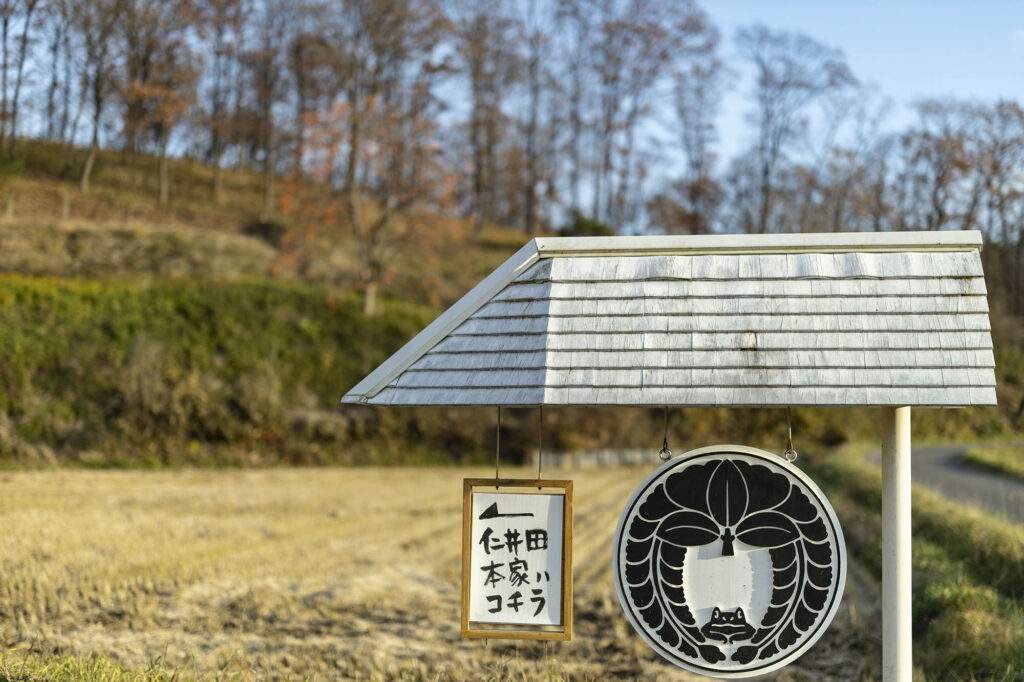
A sign guiding visitors to Niidahonke. The symbol mark features a frog, a creature symbolic of the rice paddies, incorporated into the Shimo-mori family crest.
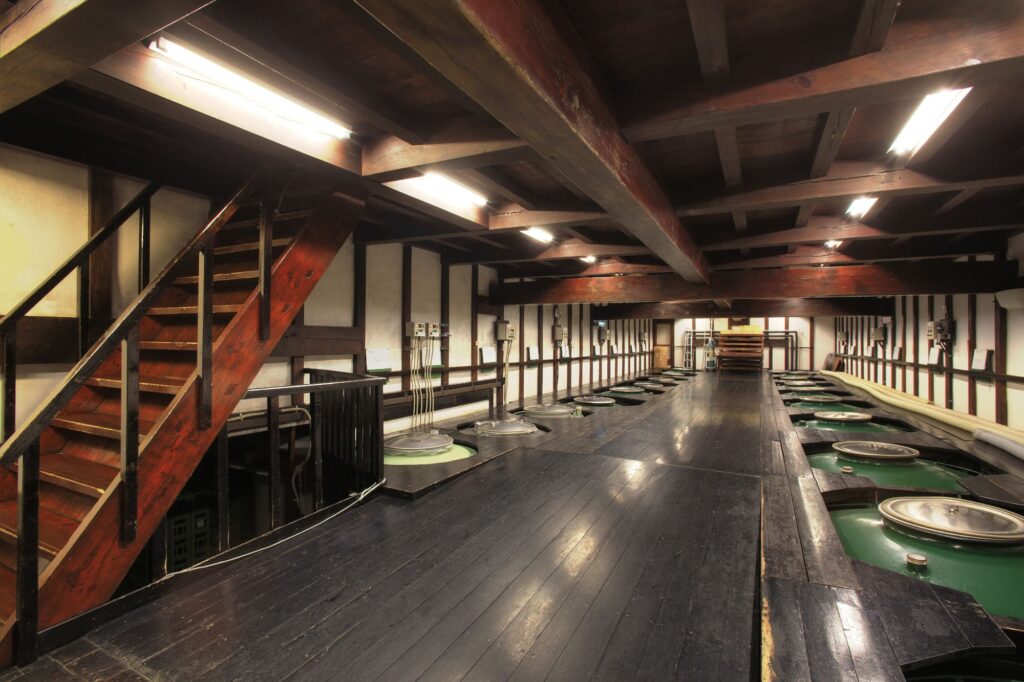
The floor and walls of the brewing house, which was relocated from Kitakata City, are covered in steel plates polished to a shine. The enamel tanks seen throughout will be replaced in the future with wooden vats made from locally sourced cedar.
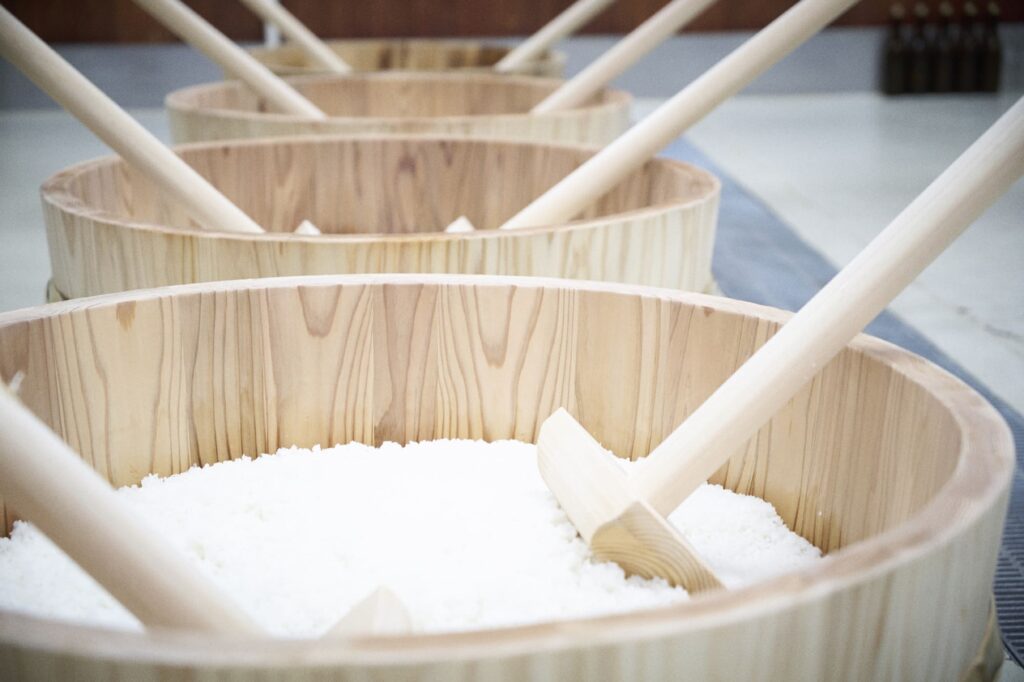
The process of the kimoto method. By grinding the rice and koji into a liquid state, an environment conducive to the growth of lactic acid bacteria is created, allowing the brewery to incorporate lactic acid from the air.
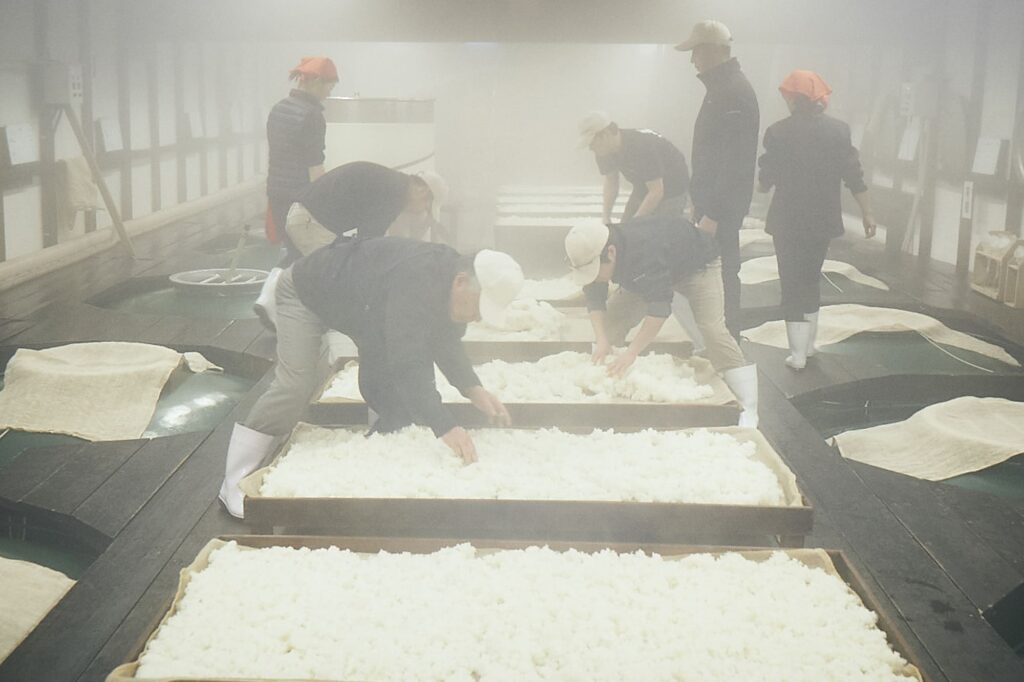
A scene from the brewing process. Sake rice, koji rice, and water are added to the tanks, which contain cedar staves, in three separate stages to encourage fermentation.
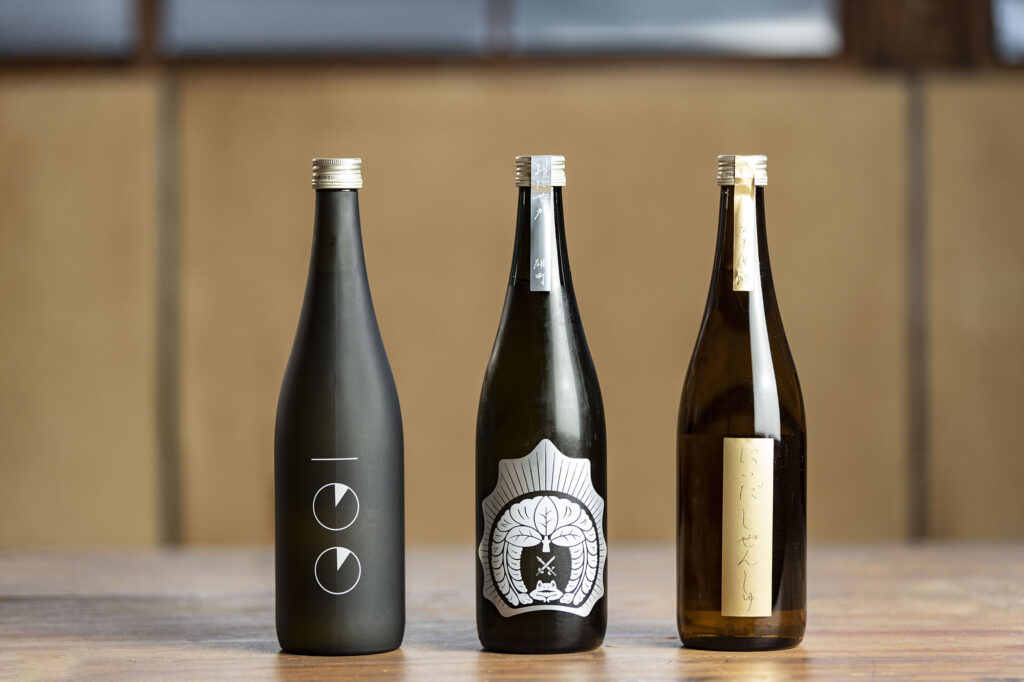
Signature brands of Niidahonke. From left: 'Hyakunen Kijoshu,' 'Odayaka Junmai Ginjo,' and 'Shizenshu.' Kijoshu is a style of sake brewed using sake instead of water. At Niidahonke, they have a project to create a sake that will be completed in 100 years, using a method where the kijoshu made in their 300th anniversary year is used as an ingredient to brew the next year's batch, and so on.
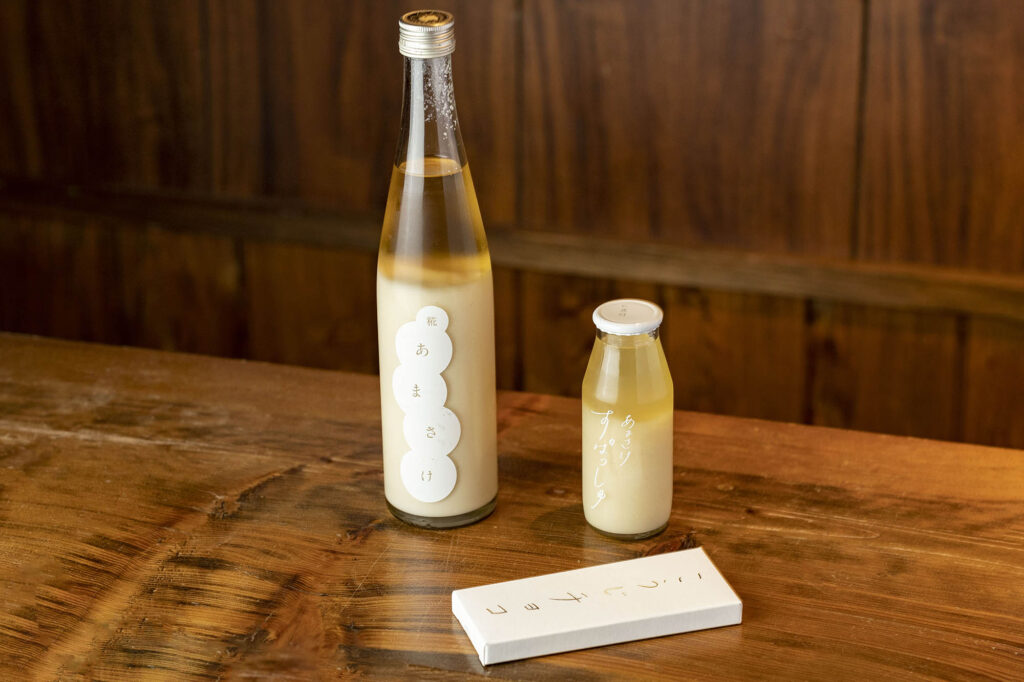
They also develop and sell products made with koji and lactic acid bacteria, such as 'Nomu Tenteki' (Drinkable IV Drip) (left), 'Amazake Splash' (center), and 'Koji Choco' (right).
POINT 01_A Passion for Our Rice
In 2010, we achieved our goal of using 100% natural rice to brew 100% junmai sake. Our future vision is to expand natural rice cultivation from our own paddies to the entire Tamura Town area.
POINT 02_The Drive for Self-Sufficiency
Our goal is to become a self-sufficient brewery and to help our community become a self-sufficient town. We also have future plans to generate our own electricity.
POINT 03_A Place for People to Gather
Through events like our "Niida Thanksgiving Festival" and "Sweets Day," we hope to bring energy and vitality to Fukushima and our local community.
- Name
- Niidahonke
- Established
- 1711
- Address
- 139 Takayashiki, Kanazawa, Tamura-machi, Koriyama-shi, Fukushima
- TEL
- 024-955-2222
- Business Hours
- [Phone] Monday - Friday, 10:00 AM - 5:00 PM (excluding public holidays, summer holidays, and New Year holidays)
- Other
- A brewery shop is available on-site. Reservations are required for brewery tours.