
Learning About Sake
Fukushima Sake Trivia
Fukushima sake has set an all-time record, winning the most gold awards of any prefecture at the Annual Japan Sake Awards for eight consecutive years.
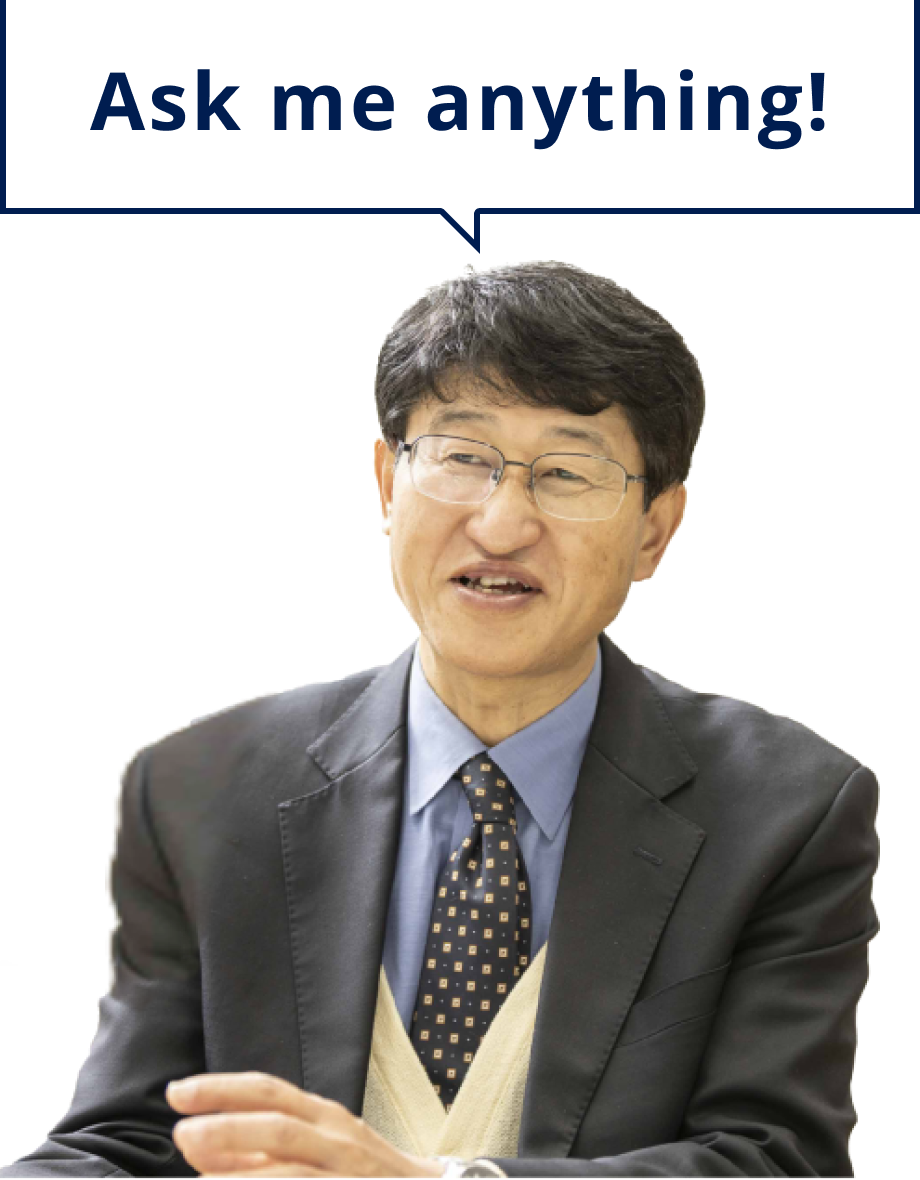
I'm Fukuneko and I had a special interview with Mr. Kenji Suzuki of the Fukushima Technology Center. Nicknamed the "God of Sake Brewing," he is the craftsman
who has elevated Fukushima sake to the next level.
He even let me in on the secrets to why Fukushima sake is so delicious!
Mr. Kenji Suzuki
Deputy Director of the Aizuwakamatsu Technical Support Center at the Fukushima Technology Center. Born in Miharu Town, Fukushima Prefecture and graduated from the Faculty of Agriculture at Iwate University. He was hired by the prefecture in 1985 and has been providing technical guidance on sake brewing for nearly 30 years, earning him the nickname "God of Sake Brewing."


Mr. Kenji Suzuki
Deputy Director of the Aizuwakamatsu Technical Support Center at the Fukushima Technology Center. Born in Miharu Town, Fukushima Prefecture and graduated from the Faculty of Agriculture at Iwate University. He was hired by the prefecture in 1985 and has been providing technical guidance on sake brewing for nearly 30 years, earning him the nickname "God of Sake Brewing."


If I were to describe Fukushima sake in a few words, they would be "Hojun" (rich and mellow), "Tanrei" (light and crisp), and "Umakuchi" (savory and flavorful).
Our goal is to create sake with a rich aroma and a light finish, a fine, clean, and crisp taste, with the natural sweetness of the rice.
When it comes to sake rice, Yamadanishiki is famous nationwide, but Fukushima Prefecture has focused on developing its own unique sake rice and yeast. This has led to the creation of Fukushima's original sake-brewing rice varieties, "Yumenokaori" and "Fukunoka", as well as "Utsukushima Yume yeast," which is perfect for brewing ginjo sake.
You could say that a key feature of Fukushima sake is its depth and versatility, which allows it to be paired with any kind of food or cuisine. I especially want to invite those who say, 'I like alcohol, but I'm not a big fan of sake,' to try Fukushima sake. I'm sure it will change their perception.

"Yumenokaori," Fukushima's original sake-brewing rice, was developed over a period of 10 years. It is a soft rice that absorbs water well and dissolves easily in the "moromi" (fermentation mash). (Photo courtesy of Fukushima Agricultural Technology Center)
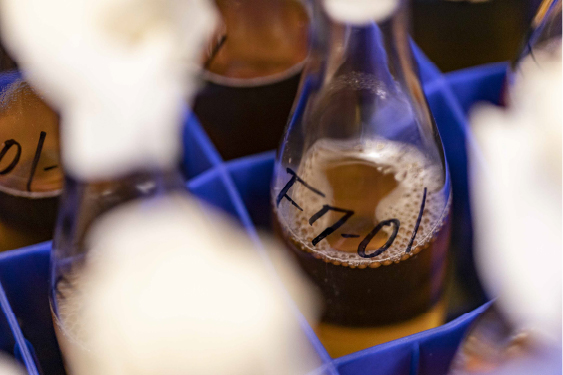
Fukushima's original yeast, "F7-01 Yeast (Utsukushima Yume yeast)," was developed using biotechnology. It produces fruity aromas reminiscent of banana and melon.


In 1990, not a single brewery from Fukushima Prefecture won a gold award at the Annual Japan Sake Awards. In response to this, and to address concerns about the future of sake brewing due to the aging of master brewers (toji) from traditional brewing regions like Nanbu (Iwate Pref.) and Echigo (Niigata Pref.), the "Sake Academy Vocational Training School" was established in 1992 to train talented local brewers.
At the time, Fukushima's production was mainly regular sake. However, the Sake Academy implemented a thorough three-year curriculum that covered all aspects of sake brewing, from classroom lectures to hands-on brewing practice, with the goal of winning gold awards at the national competition by teaching the know-how for ginjo brewing.
As a result, Fukushima made great strides, achieving a record-breaking eight consecutive years as the top prefecture for gold awards at the Annual Japan Sake Awards, ushering in a golden age for its sake.
The key to this success was the "Fukushima-Style Ginjo Brewing Manual." This manual, which is updated annually, not only details key points like how to make 'koji' (malted rice) and manage the 'moromi' (fermentation mash), but also specifies methods for eliminating brewery-specific odors known as 'kuraguse' from fermentation rooms and areas where steamed rice is cooled.
By standardizing the series of tasks that had previously relied on the experience and intuition of the toji, even young brewers with less experience became able to produce high-quality sake, leading to a dramatic improvement in the overall quality of Fukushima sake.

A class at the Sake Academy Vocational Training School (photo shows a sake tasting practicum). After three years of study, students can earn the "Shuzoshi" (Sake Brewer) certification. (Photo courtesy of the Sake Academy)
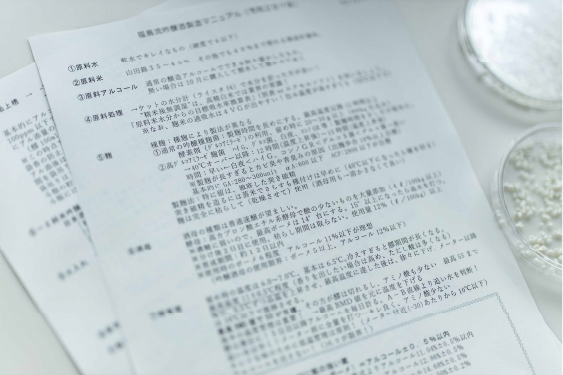
The Fukushima-Style Ginjo Brewing Manual. Although only two A4 pages, it is packed with the know-how needed to win a gold award.


Fukushima is the third largest prefecture in Japan, making it vast and diverse. Because the climate and culture differ in each area, the food and flavor preferences also vary. This has led to the birth of many unique sakes with distinct regional characteristics.
Fukushima's hot summers are suitable for rice cultivation, while its cold winters create the clear air that suppresses the growth of unwanted bacteria. You could say that Fukushima's climate is ideal for sake brewing.
Furthermore, another characteristic of sake brewing in Fukushima is the active exchange between breweries. At the "High-Quality Sake Research Society," commonly known as the "Kin-tori Kai" (Gold Medal Club), breweries that would normally be competitors come together to share their techniques and know-how, honing their skills through joint analysis and research. Nationwide, there's a trend where regions with strong collaboration among breweries tend to produce increasingly delicious sake.
Please enjoy the unique sakes from our different breweries, pairing them with your favorite dishes!
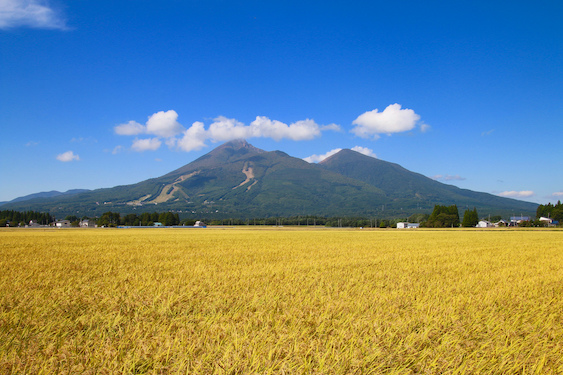
Mount Bandai, a symbol of Fukushima, with heads of rice. Fukushima is divided into three areas—Hamadori, Nakadori, and Aizu—each with its own diverse sake brewing style that takes advantage of its unique climate and environment. (Photo / pixta)