
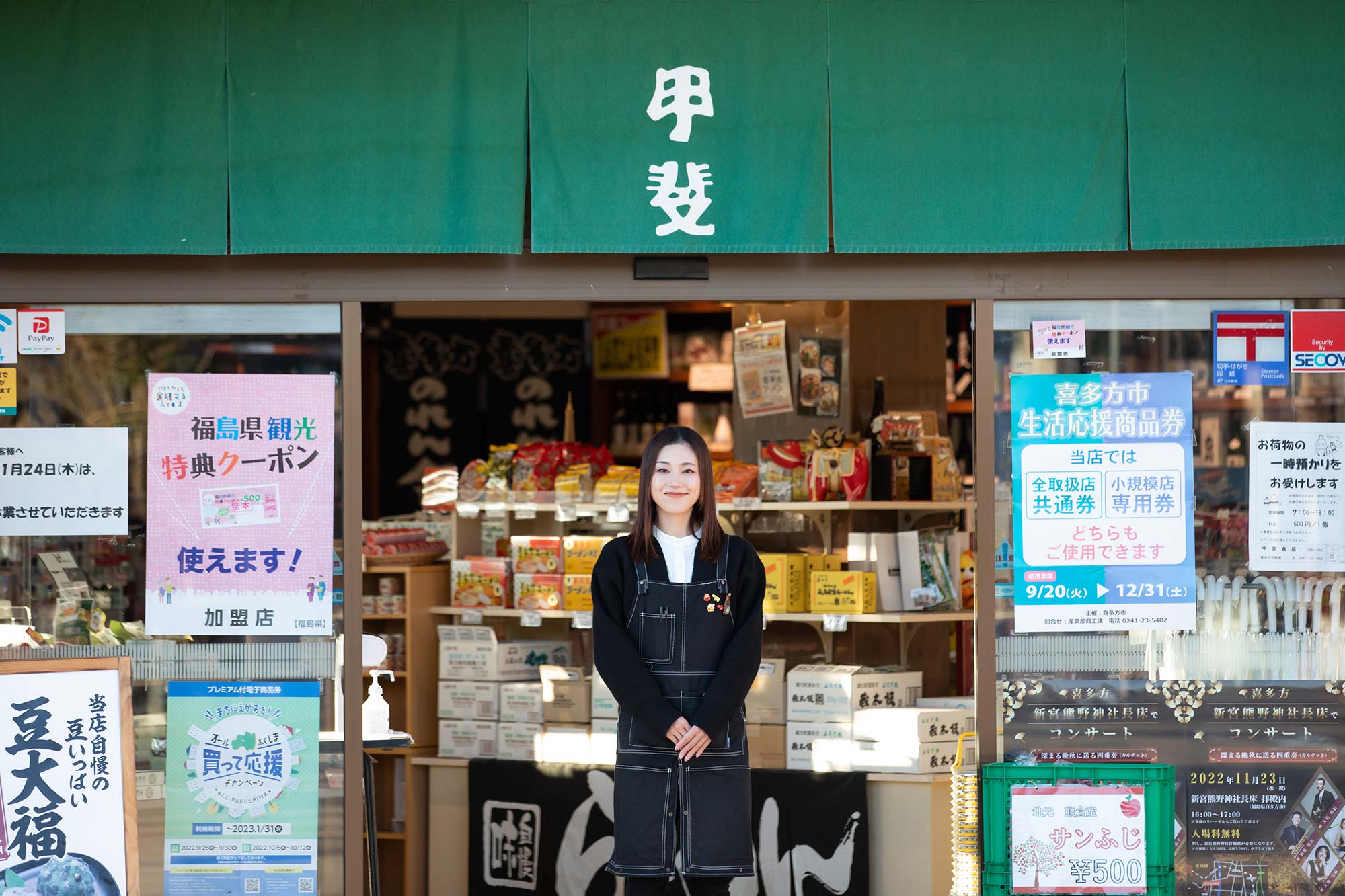

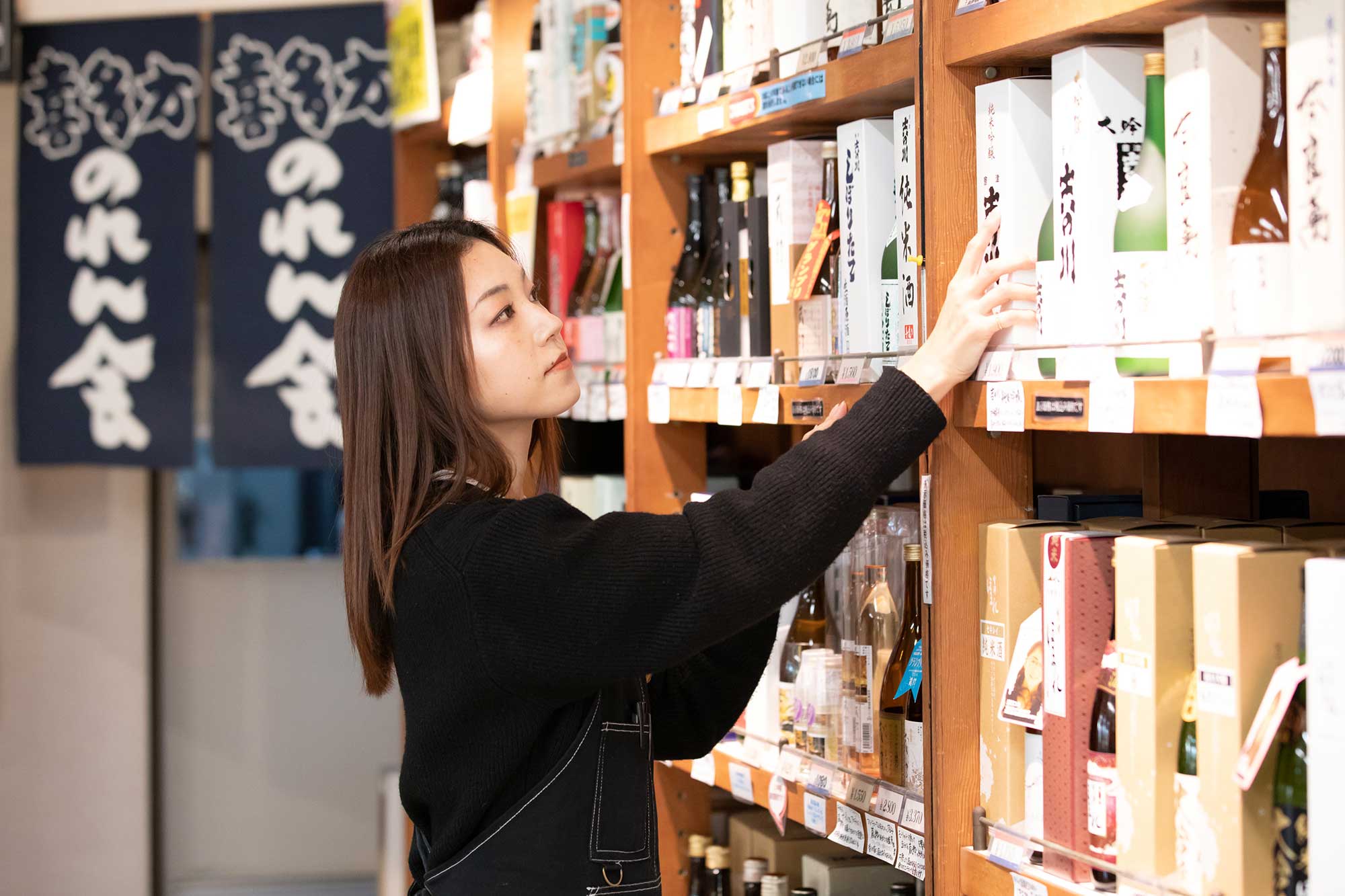
――― First, could you please tell us about your connection to Fukushima's sake?
When I was living in Tokyo, I preferred beer and highballs, so I didn't have many opportunities to drink sake. I became more familiar with it after I returned to Kitakata City. My family's shop carries local sake, so at first, I was drinking it to learn more for work. However, as I began to taste the rich variety of Fukushima's local sake, I started to enjoy making discoveries, like, "Oh, this is the type of sake I like," or "This sake would pair well with this kind of snack."
――― What do you like about Fukushima's sake?
The Hamadori, Nakadori, and Aizu regions each have their own distinct climate and environment, and I like that these differences are clearly reflected in the characteristics of the sake. I believe the quality of each area's water, rice, and local character is conveyed through its sake. Another appealing aspect is the palpable passion of the brewers. While all the breweries are competing with their skills, you can also feel their collective spirit of wanting to elevate Fukushima's sake as a whole, not just the sake from their own brewery.
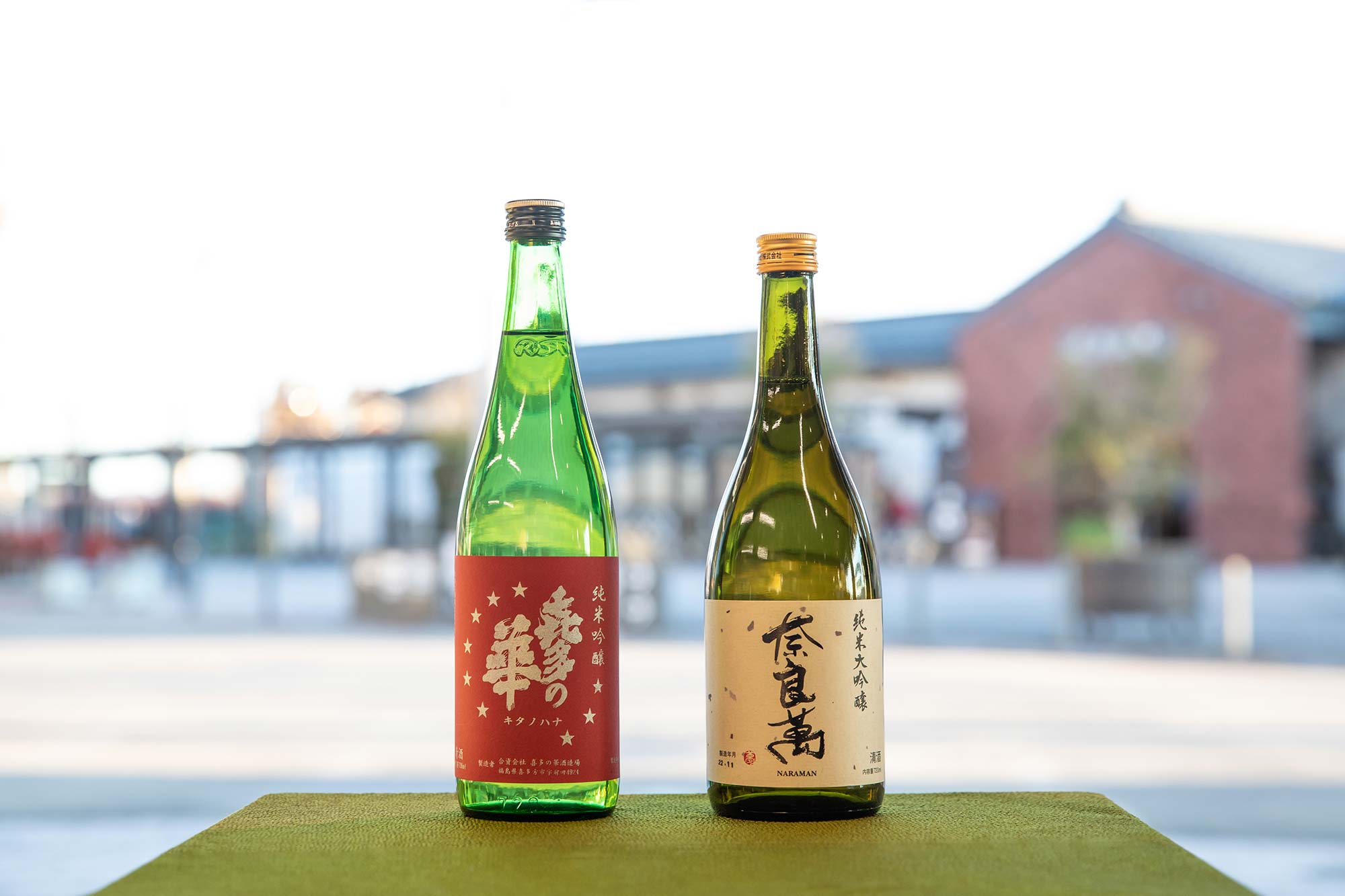
"Junmai Ginjo Kitanohana ☆9 Gohyakumangoku" (left) and "Naraman Junmai Daiginjo."
――― Do you have any particular favorite brands?
I like 'Junmai Ginjo Kitanohana ☆9 Gohyakumangoku' from Kitanohana Shuzojo. Since the fourth-generation brewer, Ms. Rie, took charge of the brewing process, the number of stars on the label has increased every year, so it is commonly called the 'Hoshi (Star) Series.' It has an initial sweetness but a clean finish, making it very easy to drink. Another favorite is 'Naraman Junmai Daiginjo.' It is gorgeous, and you can clearly feel both its umami and aroma. This one is perfect for drinking with a group or with guests.
――― Do you prefer drinking out or drinking at home? Could you recommend a place?
I prefer to drink out. If you are looking to have a good time with a few friends, I recommend "Oryori Funaba α." You can enjoy a wide variety of unique local Kitakata sake, and the food is delicious as well. For drinking by myself, I would suggest "Jozoshu Bar Nidaime Kogiku." They also have a great selection of local sake, so I often stop by to both enjoy and study, thinking, "The Naraman Hiyaoroshi is in, so I'll have a glass before heading home."
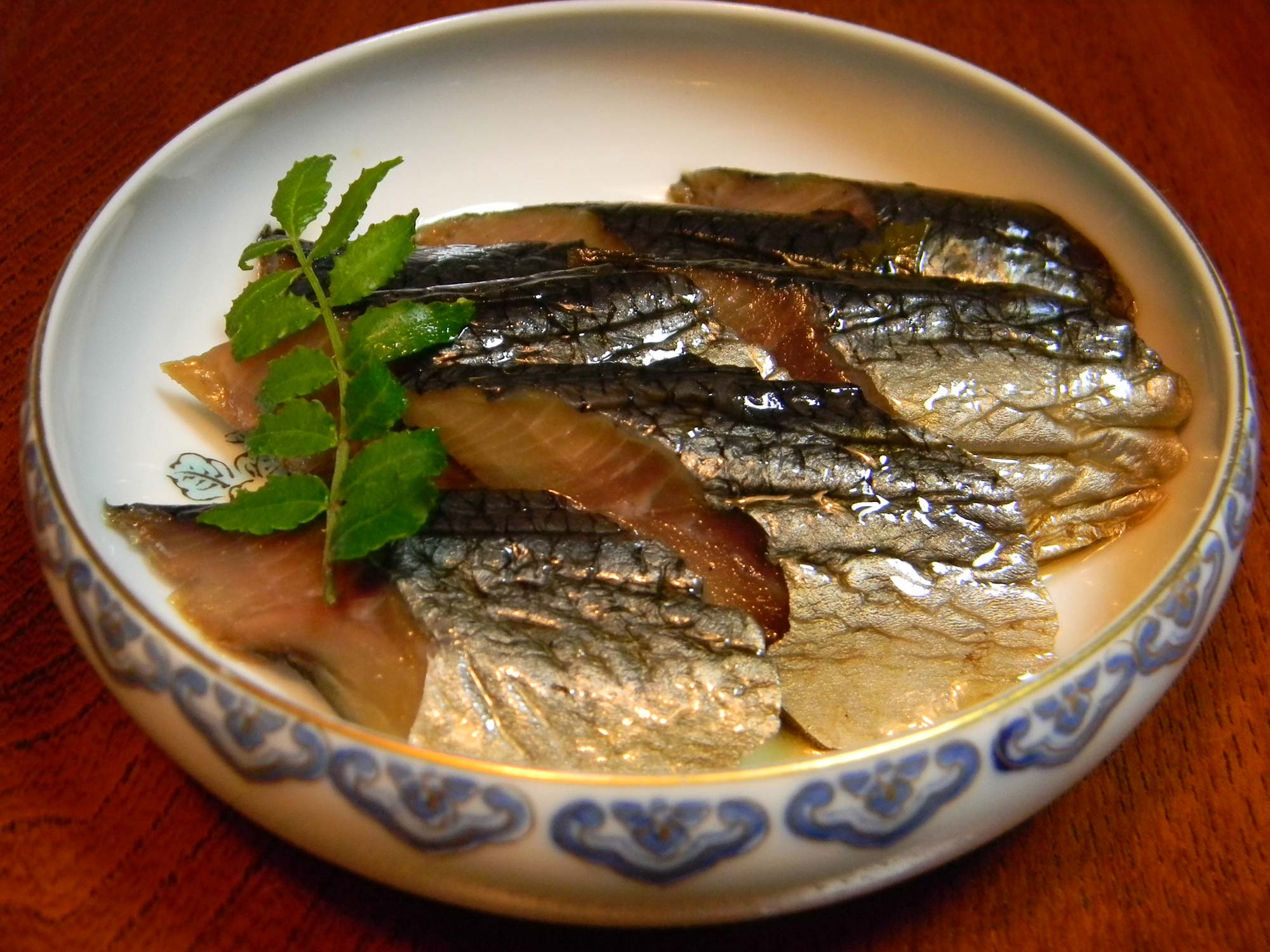
A local dish from Aizu, made with herring (in season in spring) and fresh Japanese pepper sprouts. An irresistible pairing with sake. (Photo courtesy of Takasagoya Shoten Gomei Gaisha)
――― What are your favorite food pairings?
A favorite snack of mine is Nishin no Sansho-zuke (herring pickled with Japanese pepper), a local dish from the Aizu region. We actually sell it at our shop; it’s herring pickled in vinegar that contains Japanese pepper. I like to cut it into small pieces and savor it bit by bit, enjoying the marriage with sake. Basashi (horse sashimi) is also wonderful. In Aizu, basashi is a common food that you can even find in supermarkets. It’s light yet tender and very delicious. Eating it with karashi miso (mustard miso paste) makes the sake go down even more smoothly.
――― Finally, could you share a message of love for Fukushima's sake?
In the hopes of sharing the unique local sake of Kitakata with customers all over Japan, we at Kai Shoten started the "KaiEri Subscription Box" three years ago. Each month for four months, we deliver a selection of special, luxurious sake and snacks from eight different breweries in Kitakata—items that can only be purchased here. Please take this opportunity to enjoy the sake of Fukushima, which boasts a wonderful range of "rich, crisp, and flavorful" profiles.
