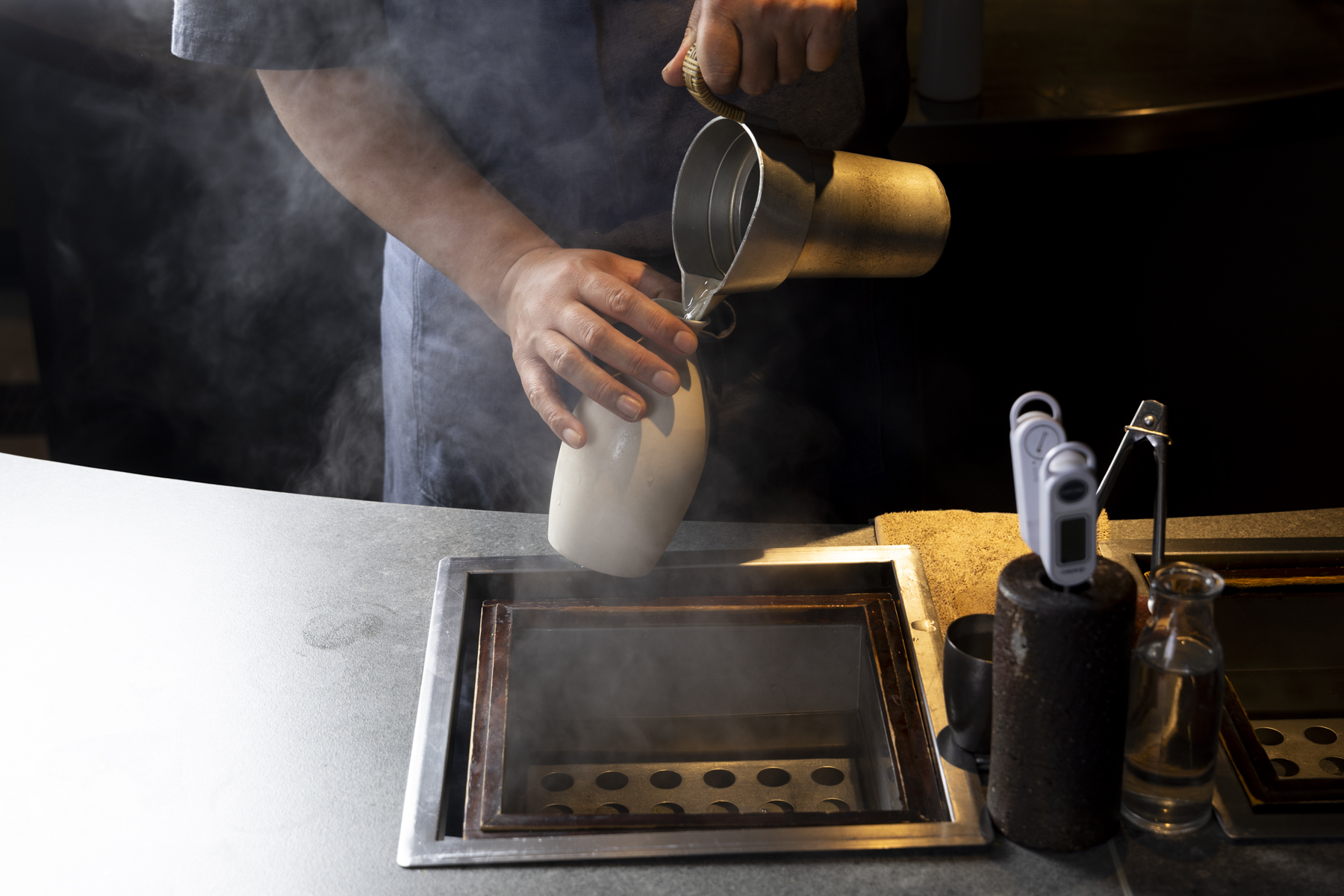
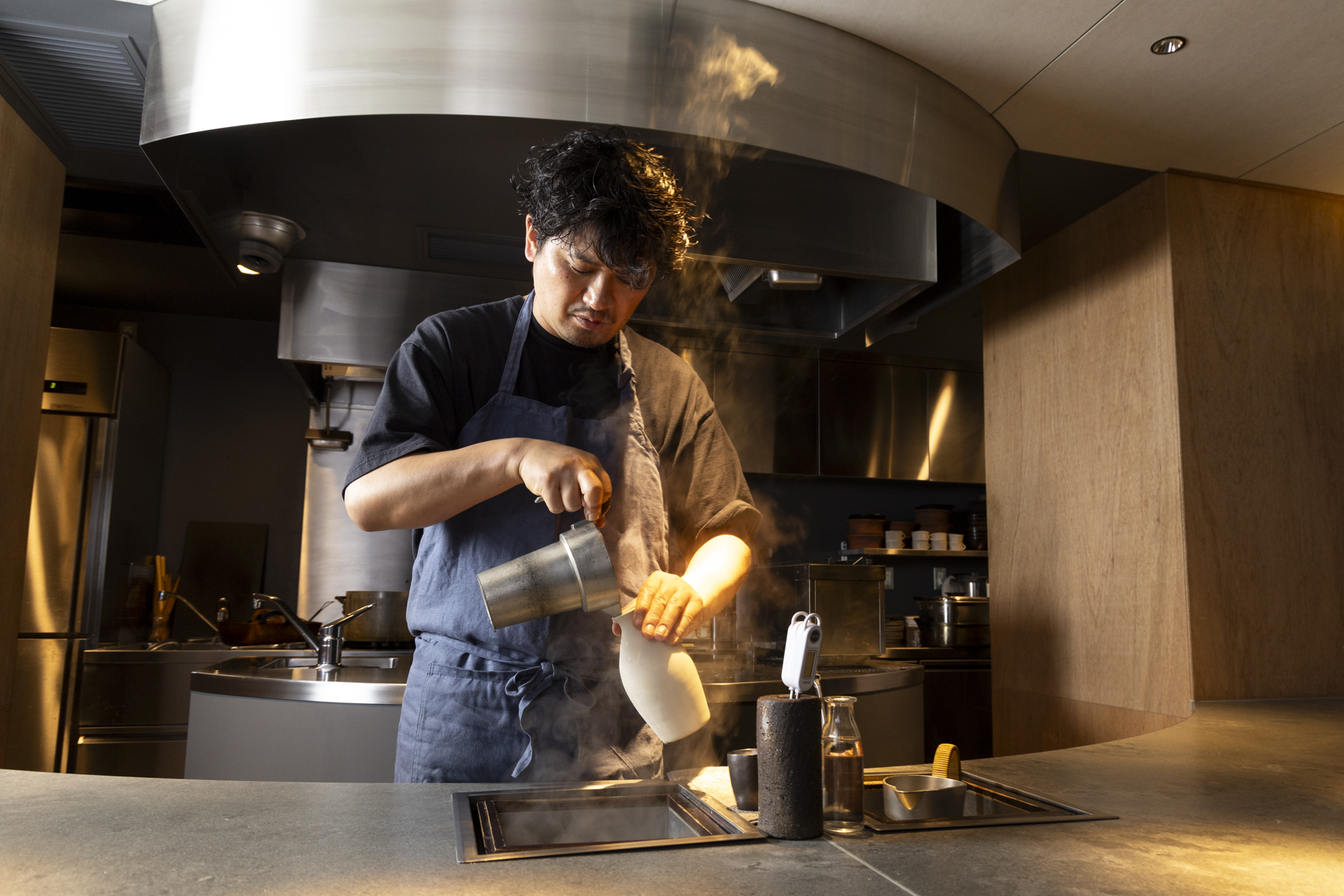


On the counter are two kandoko (vessels for water baths), one at 60°C and one at 90°C. He warms sake using five types of vessels, including copper chirori (sake pitchers), which are said to have the best thermal conductivity and enhance crispness. "If you compare it to cooking," he explains, "copper is 'grilling.' Tin is 'simmering,' a beaker is 'steaming,' a stainless steel decanting vessel is 'deep-frying,' and titanium is 'wood-fire cooking.' I warm the sake by imagining a cooking method for each type of vessel."
Warmed Sake is Gentle on the Body
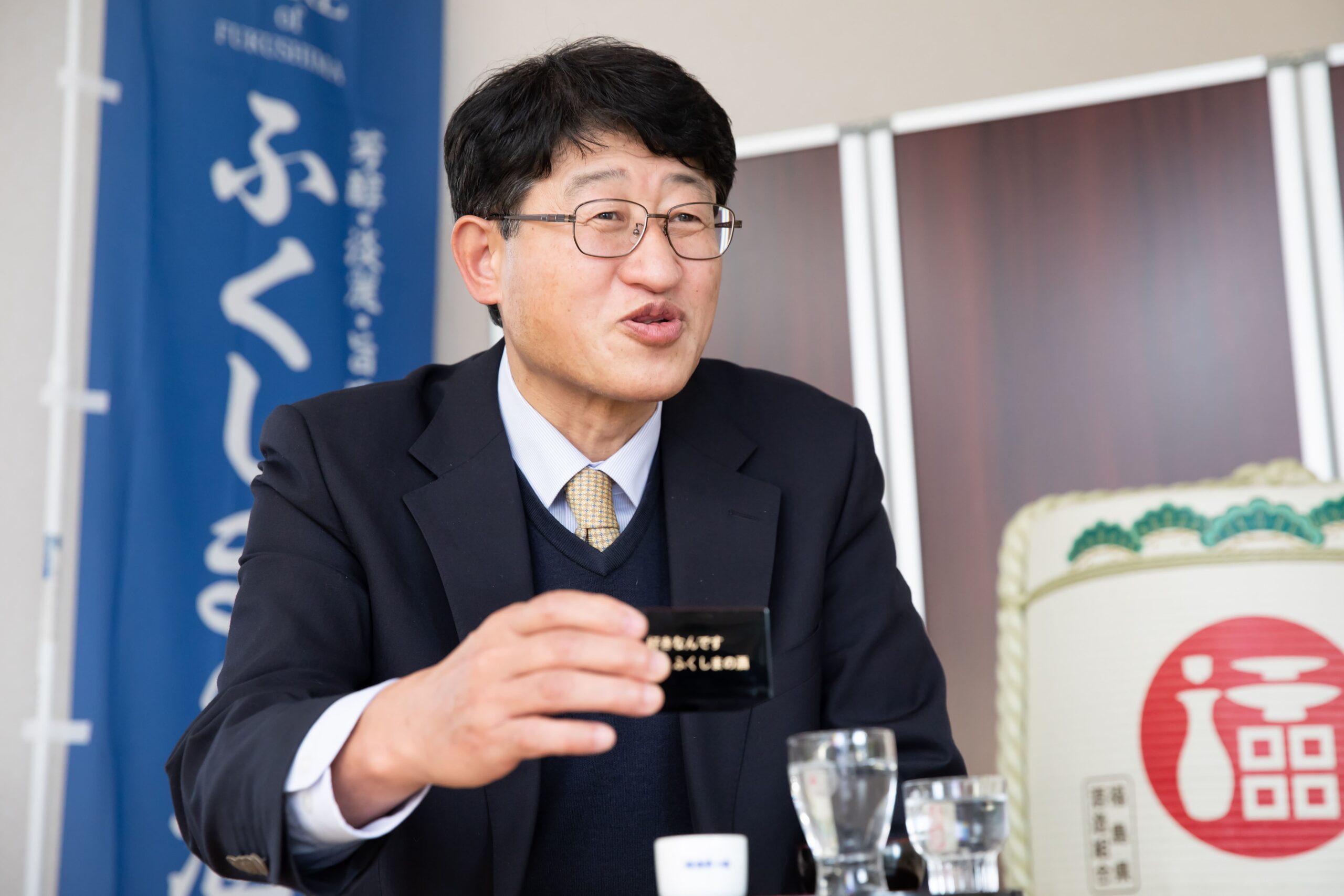
According to Mr. Takasaki, a major appeal of hot sake is its gentleness on the body. He says that warming it makes it easier for the body to break down alcohol, and there is very little risk of a hangover.
"When you drink alcohol, its decomposition in the body seems to begin at a temperature close to body temperature. This means hot sake is broken down more easily than chilled sake, and you wake up feeling refreshed the next morning."
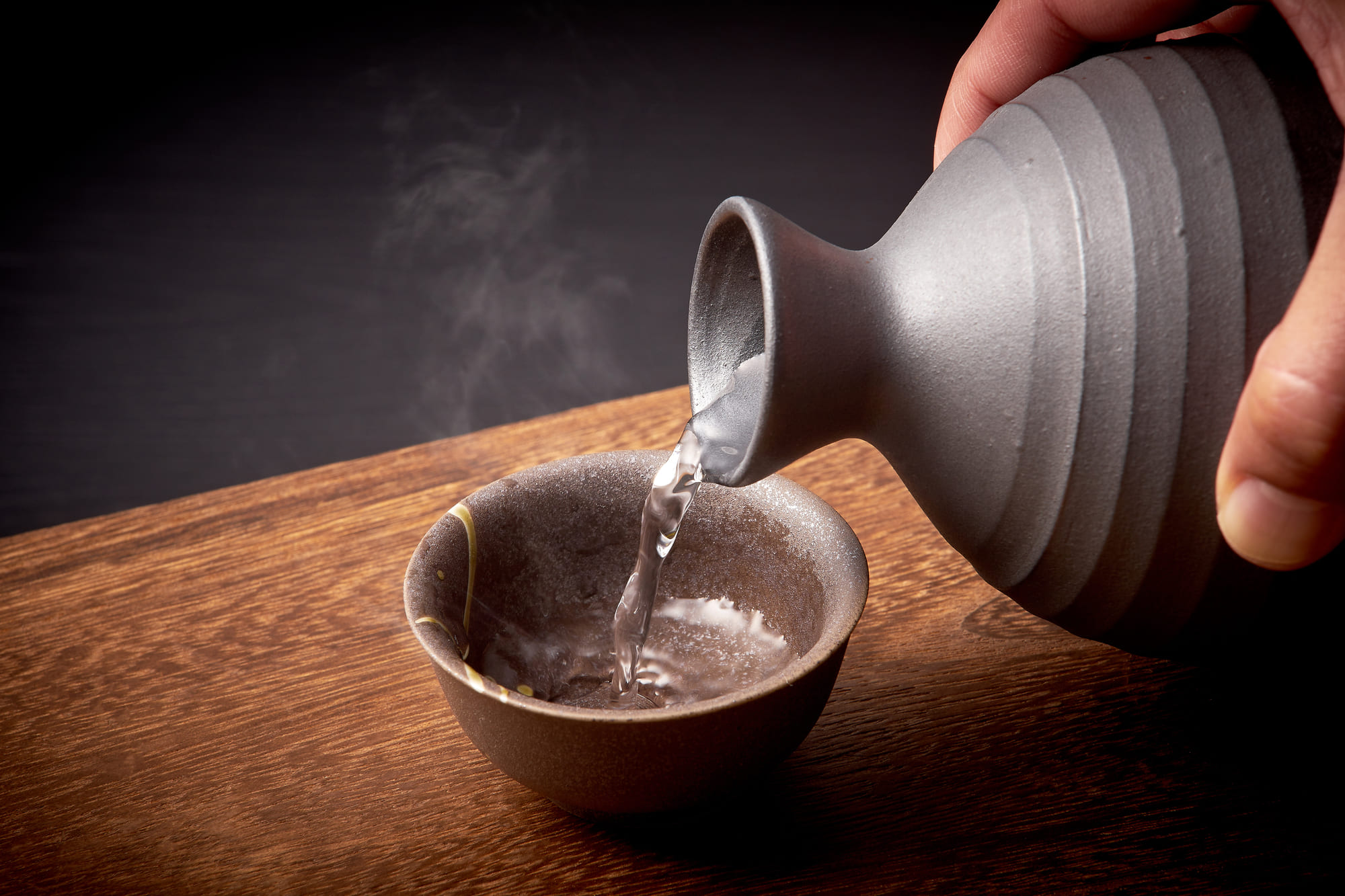
Another point is taste. The human tongue has difficulty perceiving flavors in cold things, and it becomes easier to find flavors delicious in the 30-40 degree Celsius range. Warming sake also enhances its flavor, which expands the range of possible food pairings.
"The culture of enjoying chilled sake is a modern one that developed with refrigeration technology. Originally, sake was meant to be drunk warm. Furthermore, in the past, it was natural for rice to be grown without pesticides by circulating local organic matter. Rice grown that way is delicious, right down to the bran. Therefore, sake made with rice from natural or organic farming methods doesn't need to be polished much and has absolutely no unpleasant off-flavors. Warming it brings out and expands its natural deliciousness."
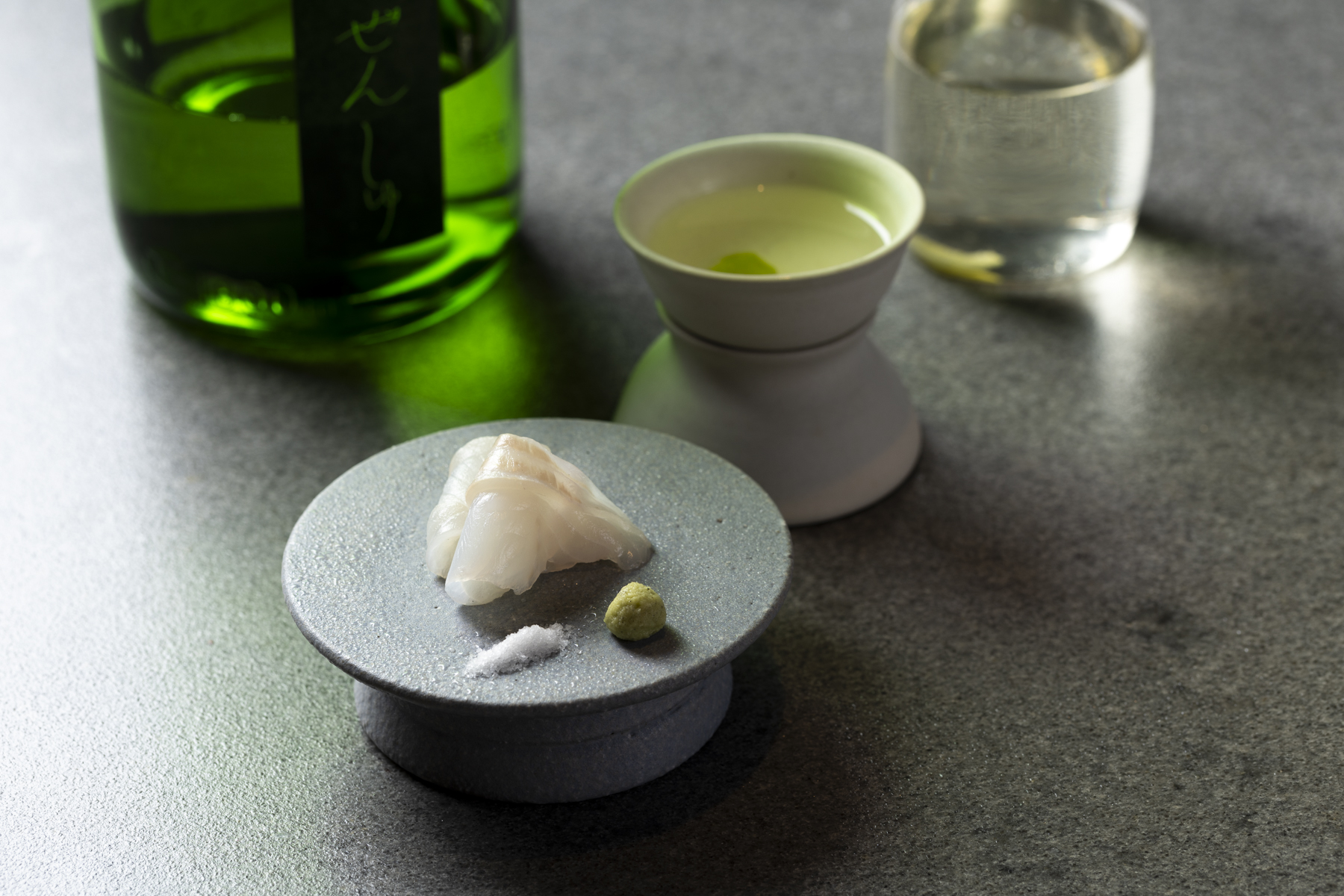
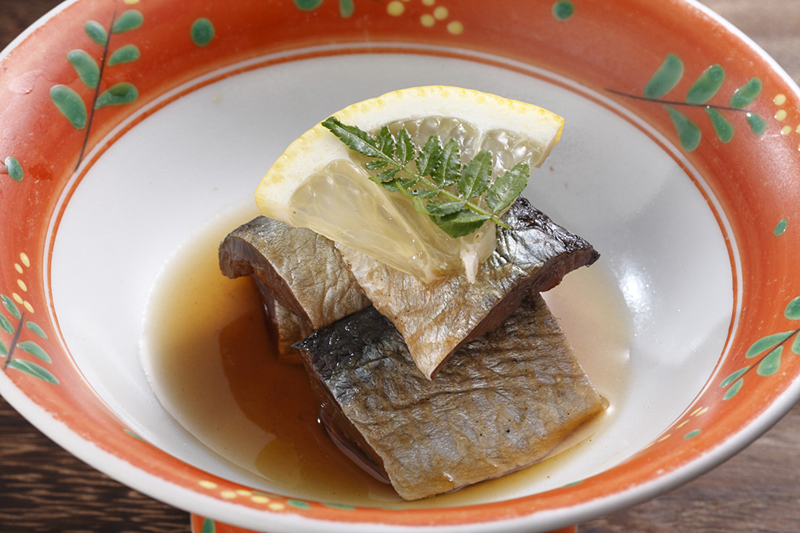
"Shizenshu Melon 3.33" (niidahonke, Koriyama City, Fukushima Prefecture) Bergamot-kan 58°C x Matsukawa-garei (marbled sole) Sashimi
The sake is warmed in a titanium chirori and finished with the peel of a domestic bergamot to add aroma. "The warm sake melts the oils in the sashimi, amplifying the umami. The aroma of the bergamot is refreshing."
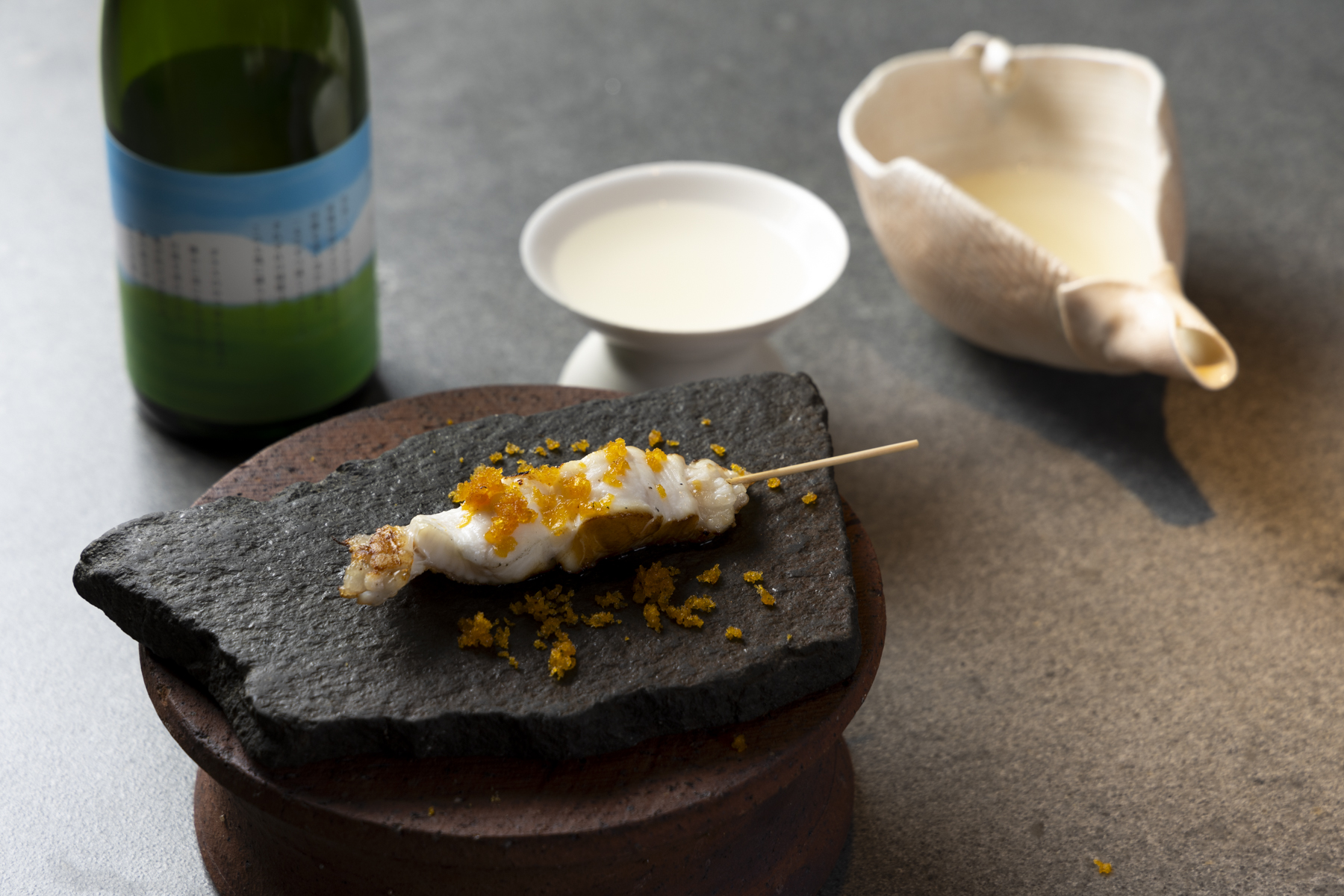
"Mizu wo Amu -Agriroad-" (haccoba, Minamisoma City, Fukushima Prefecture) 53°C x Straw-grilled Nameta-garei (slime flounder)
The delicate and clean quality of the sake harmonizes with the light flavor of the slime flounder. It is finished with a generous sprinkling of homemade karasumi (dried mullet roe). "The umami of the karasumi pairs very well with sake," he says. "The smoky aroma from the straw adds another layer."
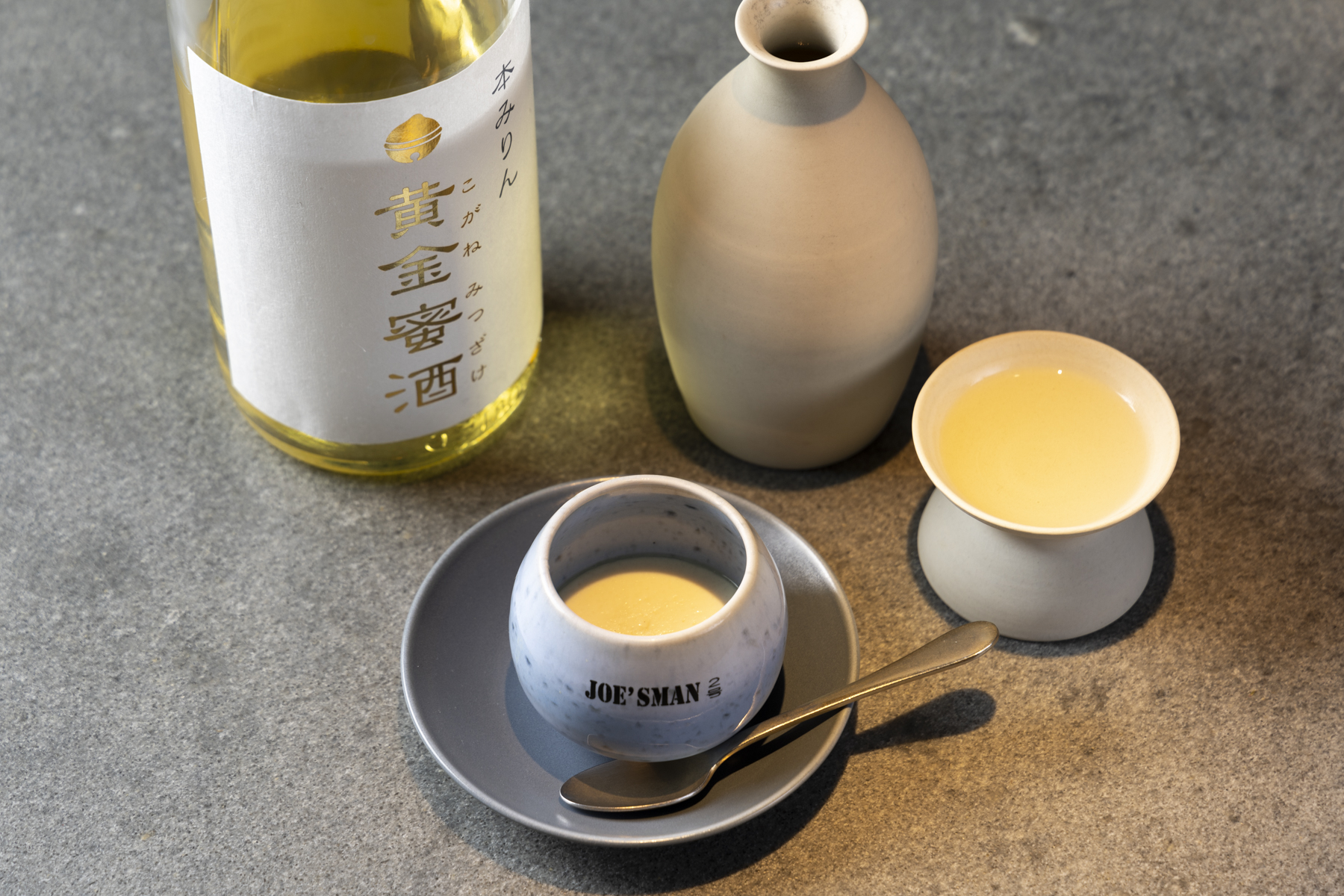
"Kogane Mitsusake" (Suzuki Shuzoten, Nagai City, Yamagata Prefecture) 68°C x Chawanmushi
"Kogane Mitsusake" is a hon-mirin (true mirin) with a clear and refined taste. When you take a sip after a bite of the chawanmushi (savory steamed custard) with hard clams and soy milk, it creates a flavor like caramel pudding in your mouth. "Adding a milk foam partway through allows you to enjoy this high-sugar-content hon-mirin to the last drop. This pairing is the signature finale at Takasaki no Okan."
When you drink warmed sake, you can "see" the soil
What kind of sake quality is suitable for warming? Mr. Takasaki says that beyond aroma and taste, he places the most importance on the "soil." "For the sake rice that becomes the raw material for sake, there are famous varieties like Yamada Nishiki and Omachi. However, when I choose sake for warming, the most important thing I consider is not the variety, but the soil. This is because I believe that by warming sake, the true character of the sake rice, right down to the soil it was grown in, becomes clear." Furthermore, what he emphasizes in pairings of warmed sake and food is the "philosophy" of the producers. Mr. Takasaki continues that he wants to connect what producers who are pursuing the same direction want to express, using temperature as a medium. "At my restaurant, we focus on sake made from rice grown in healthy soil, such as that from niidahonke, which brews only Junmai sake with 100% natural rice. Therefore, our food ingredients are also mainly naturally or organically grown produce. I believe it is the role of a restaurant to convey the value of sound food and agriculture and to raise its profile, and I want to express that through warmed sake."