
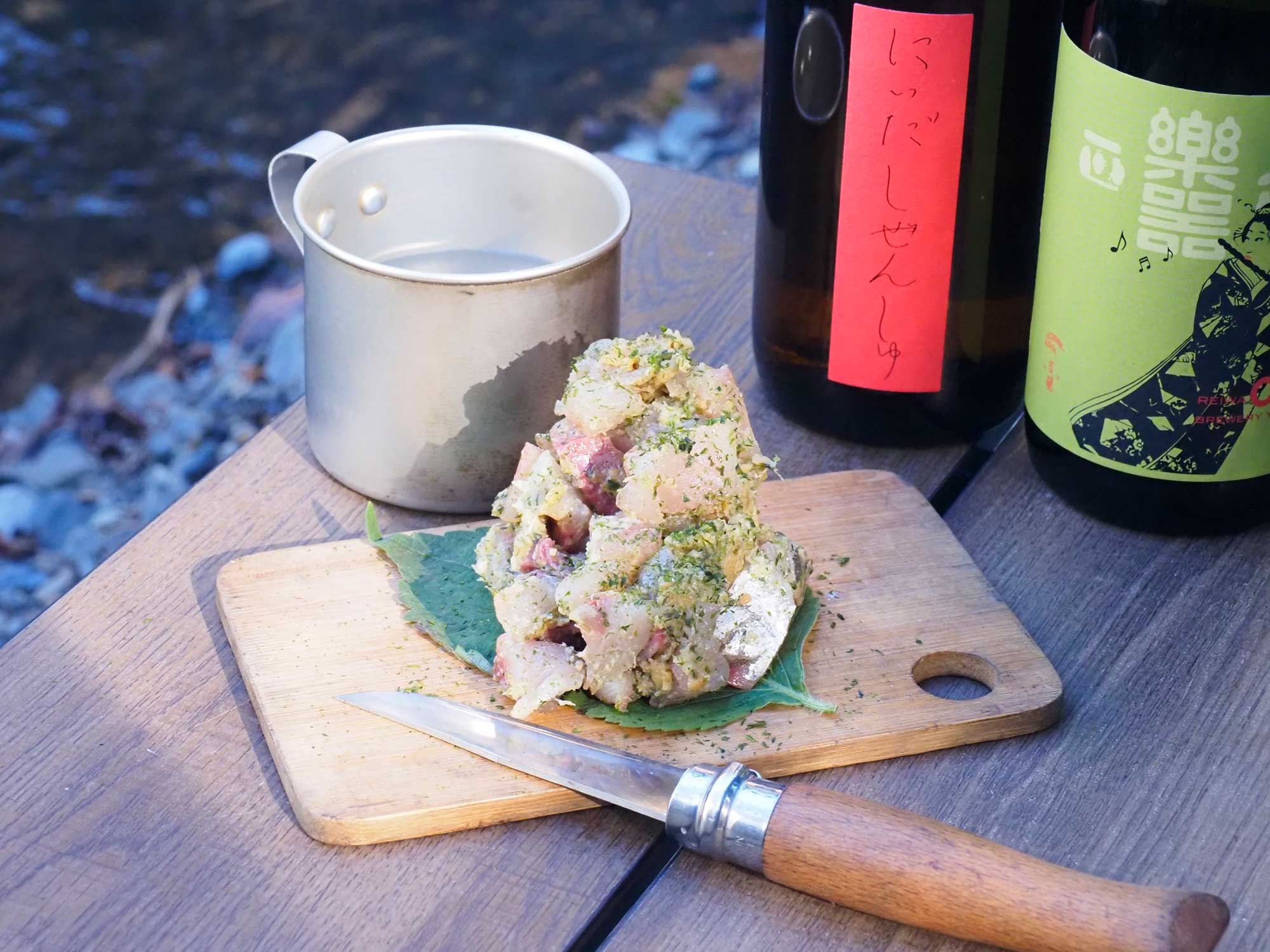
Perfect for the beginning of a camping trip, this simple appetizer is called "Aosa Namero." It is made by simply mixing roughly chopped horse mackerel with blended miso and grated ginger.
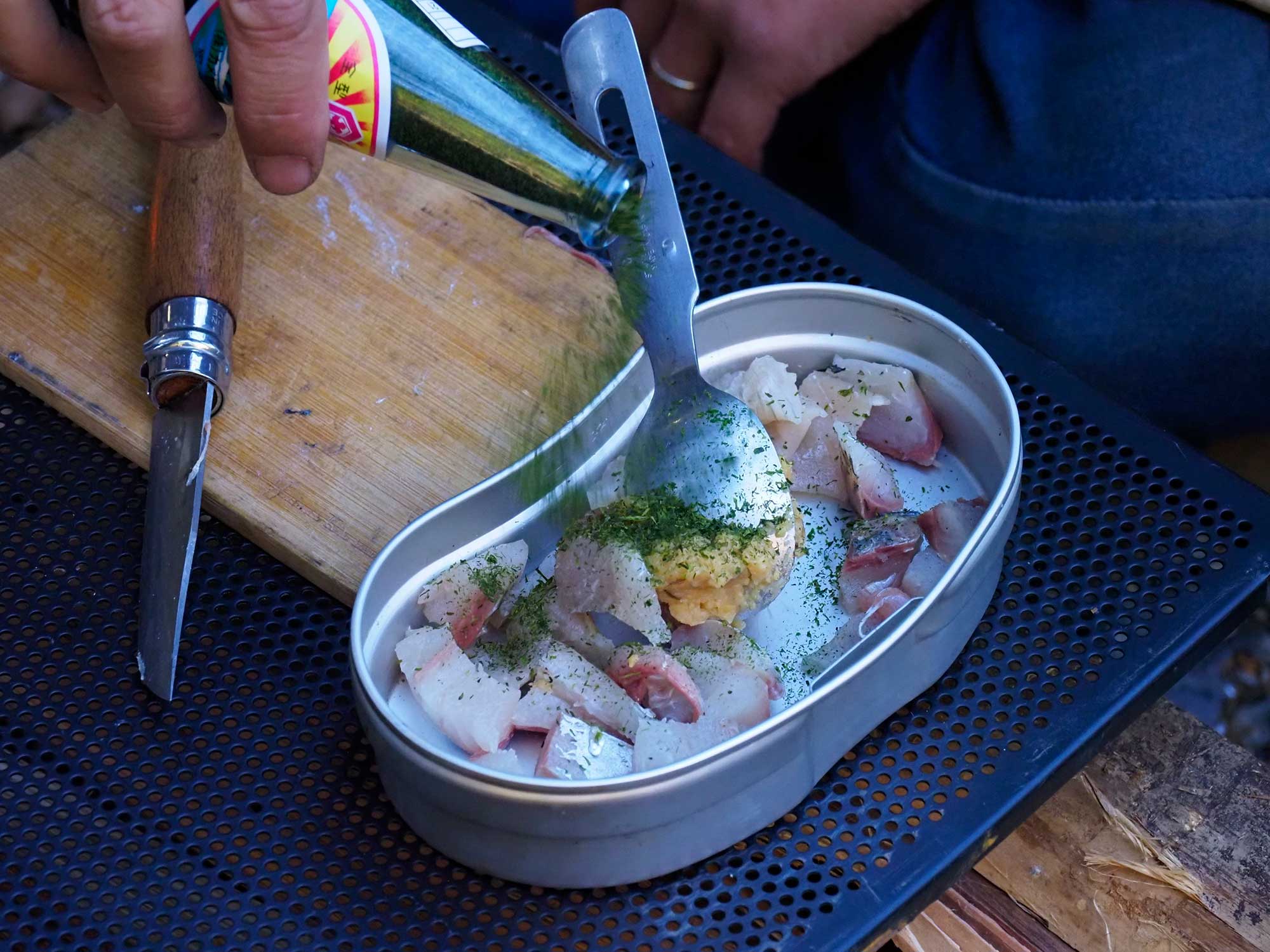
The key is to also add aonori (green laver; the kind from a tabletop shaker is fine). This imparts a savory fragrance and ensures it will pair well with sake.
POINT 01
Making Simple Appetizers for Camping
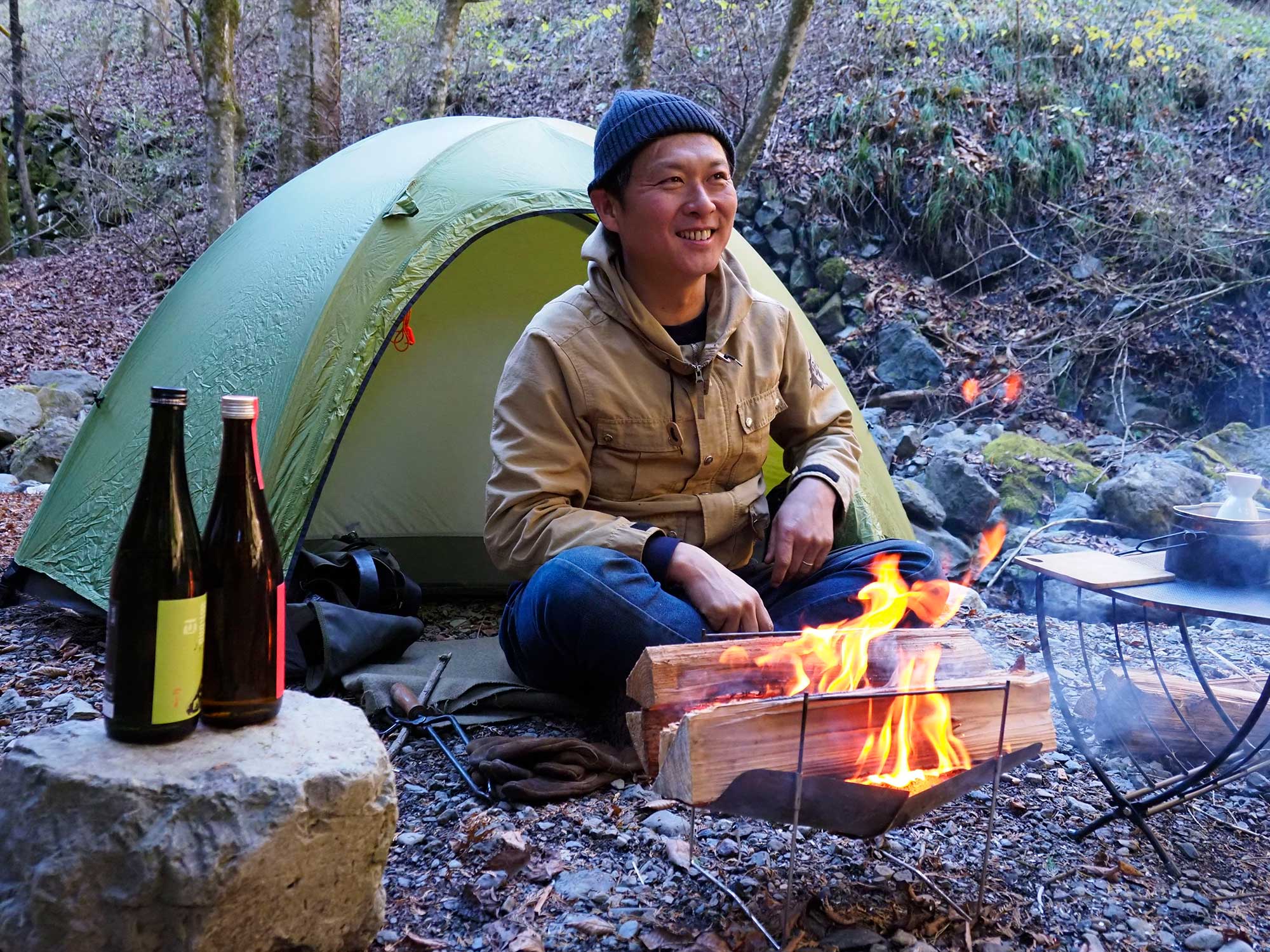
The best part of solo camping is being able to spend time at your own pace. I'm the type who likes to start drinking as soon as the tent and other setup is done (laughs), so it's important to figure out how to enjoy the 30 minutes or so it takes to prepare the bonfire, stabilize the flames, and then cook the main dish. I tried making 'namero' as an appetizer, and it was a perfect match for sake, so it has now become a staple of my camping meals. It's easy and delicious to make while waiting for the bonfire to become stable!
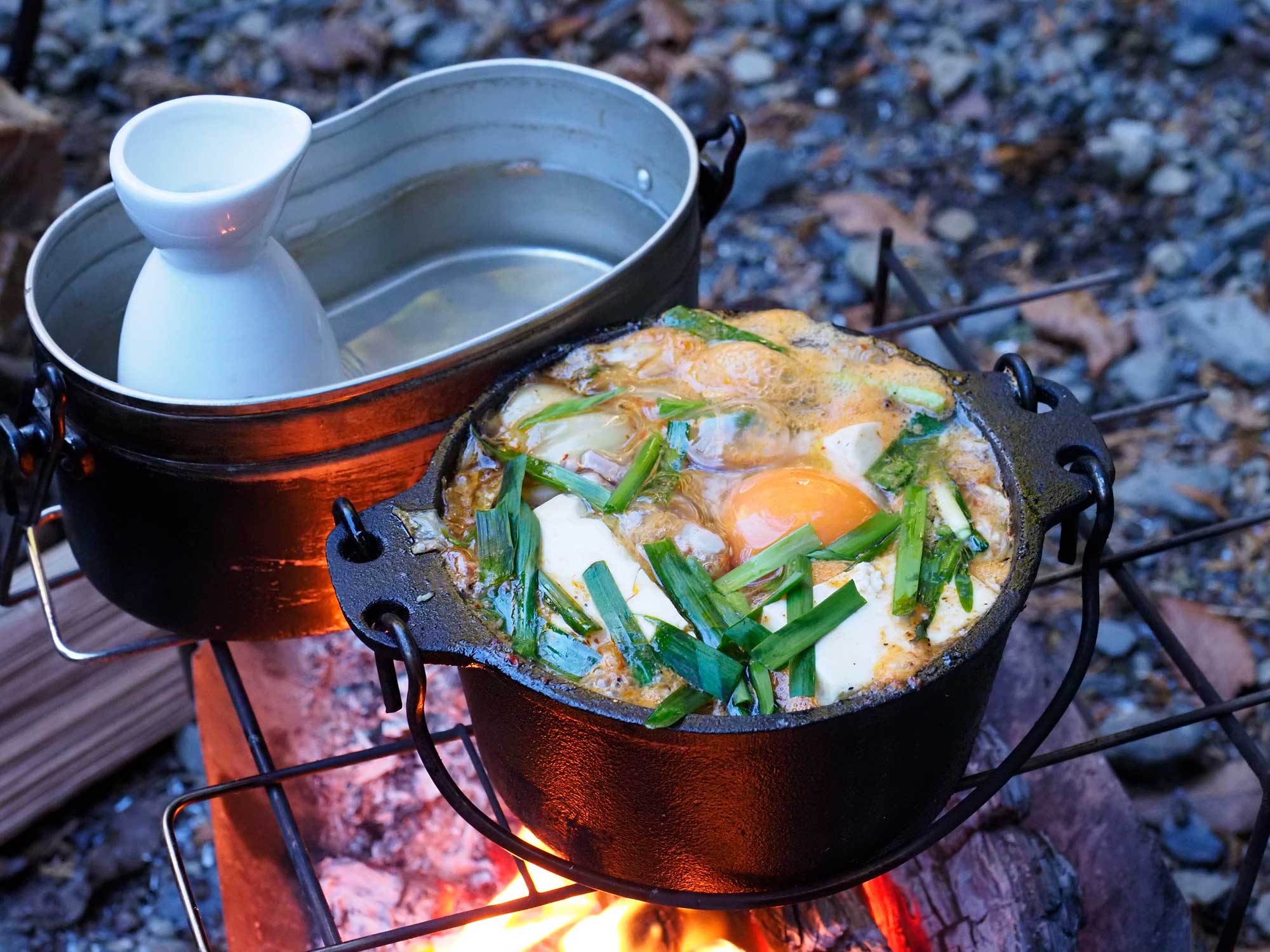
The star of this camping meal is called "A-Little-Bit-Serious Sundubu." First, stir-fry dried shrimp and green chili peppers in sesame oil. Then, add water, followed by ingredients such as clams, tofu, chives, kimchi, shiokara (salted fermented squid), chili powder, grated garlic, and ginger, and let it simmer. For a more authentic flavor, add Dashida (a powdered Korean beef stock seasoning). To finish, drop in an egg.
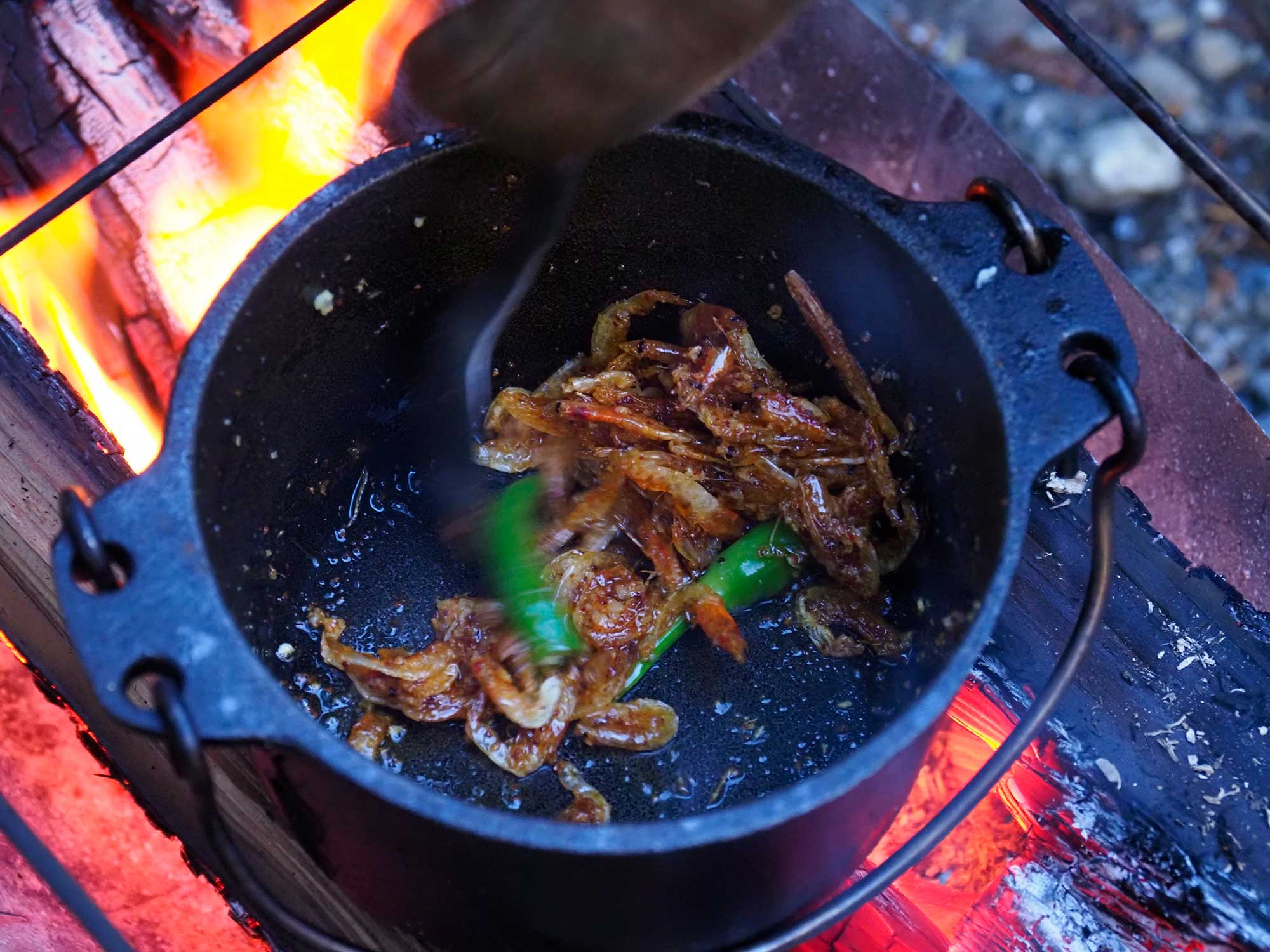
The key is the Japanese-style flavor created by adding dried shrimp and shiokara. According to Mr. Shimada, "It's a dish where you can enjoy the interplay of the different dashi flavors."
POINT 02
Let's Make a Camping Meal that Goes with Sake!
Now that the bonfire is stable and we've had a little to drink, it's time to make the star of our camping meal. This time, we're making sundubu, a spicy soup dish that's especially perfect for the cold season. Some people might wonder if soup and sake really go together, but think of it like a dobin-mushi (earthenware-steamed dish) with a bit of a kick. Paired with hot sake (atsukan), it will warm you up from the inside. It's also fun to spend 30 to 40 minutes cooking while sipping your drink.
POINT 03
Warm or Chilled, According to the Season!
One of the great things about sake is that you can enjoy it at various temperatures depending on the season, such as warmed (kan) in the cold months and chilled (hiya) when it's hot. When I warm my sake, I fill a hango (a type of outdoor cooking pot) with water, place the sake flask (tokkuri) inside, and heat it over the fire. The shallow size is a perfect fit for the flask, and I like that I can use it for both cooking and warming sake. Also, I made oden on a winter camping trip once, and the 'dashi-wari,' where you mix sake with the oden broth, was also delicious. It's fun to have that kind of playful variation from the norm.
POINT 04
Does Fukushima's Sake Go with CAMPING?
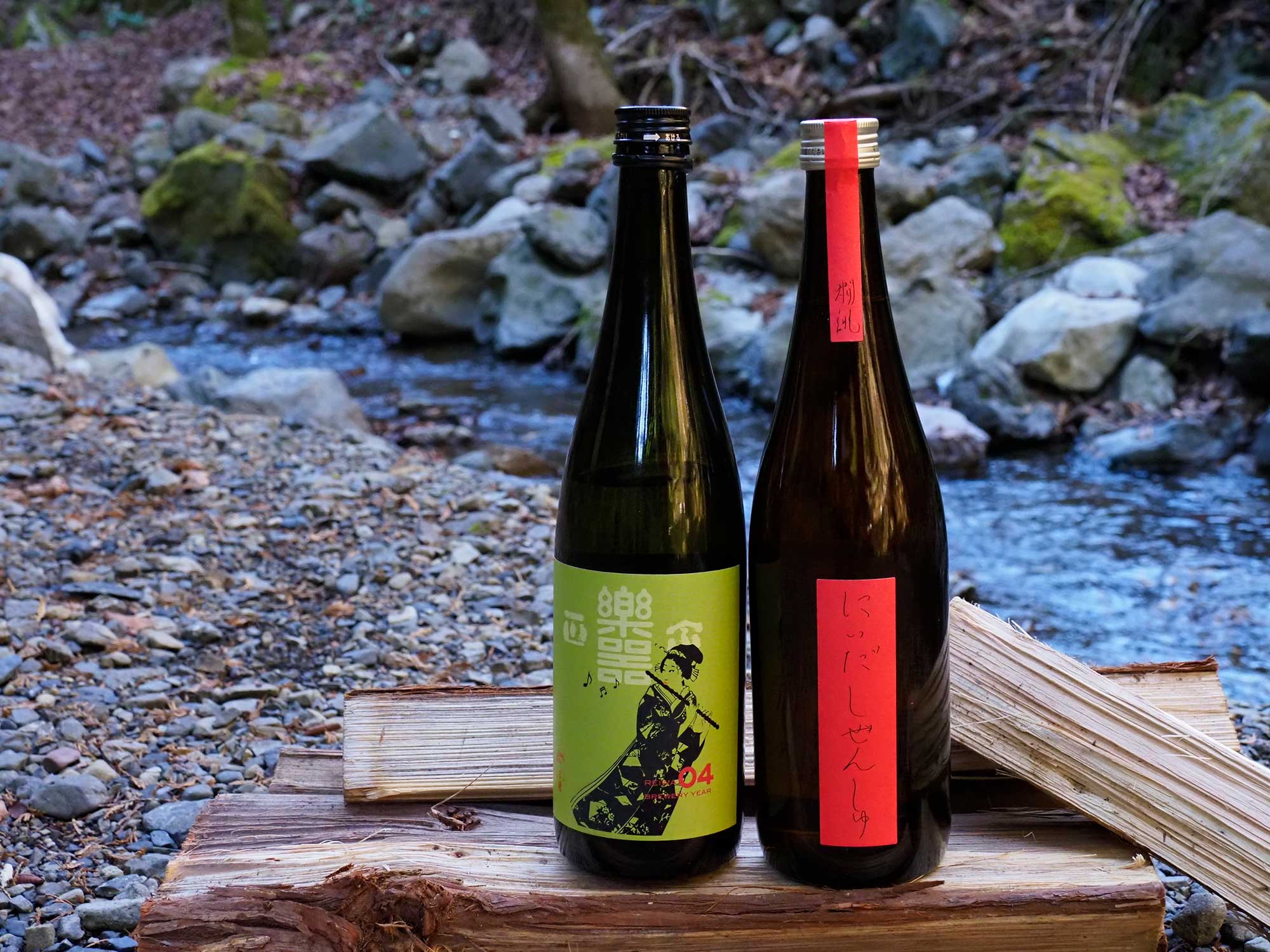
This time, from the many sakes of Fukushima, I selected 'Shizenshu' (niidahonke) for warming and 'Gakki masamune Honjozo Nakadori' (Okidaikichihonten) for chilling. The Shizenshu has been aged for a year specifically for warming, so when heated, its aroma becomes more pronounced and its flavor deepens. I liked the 'Gakki masamune' for its fruity character and clean, crisp finish. It seems like it would pair well with something like pork shabu-shabu. To savor a local sake born from the area's water and rice alongside a camp meal made with that same region's famous water is a luxurious and romantic experience you can't get anywhere else. A night of snow camping with Fukushima's local sake, with the beauty of the bonfire glowing against the snowy landscape as your side dish... that would be a wonderful experience.