――― First, could you please tell us about the background behind starting the "FUKUSHIMA SAKE PROJECT"*?
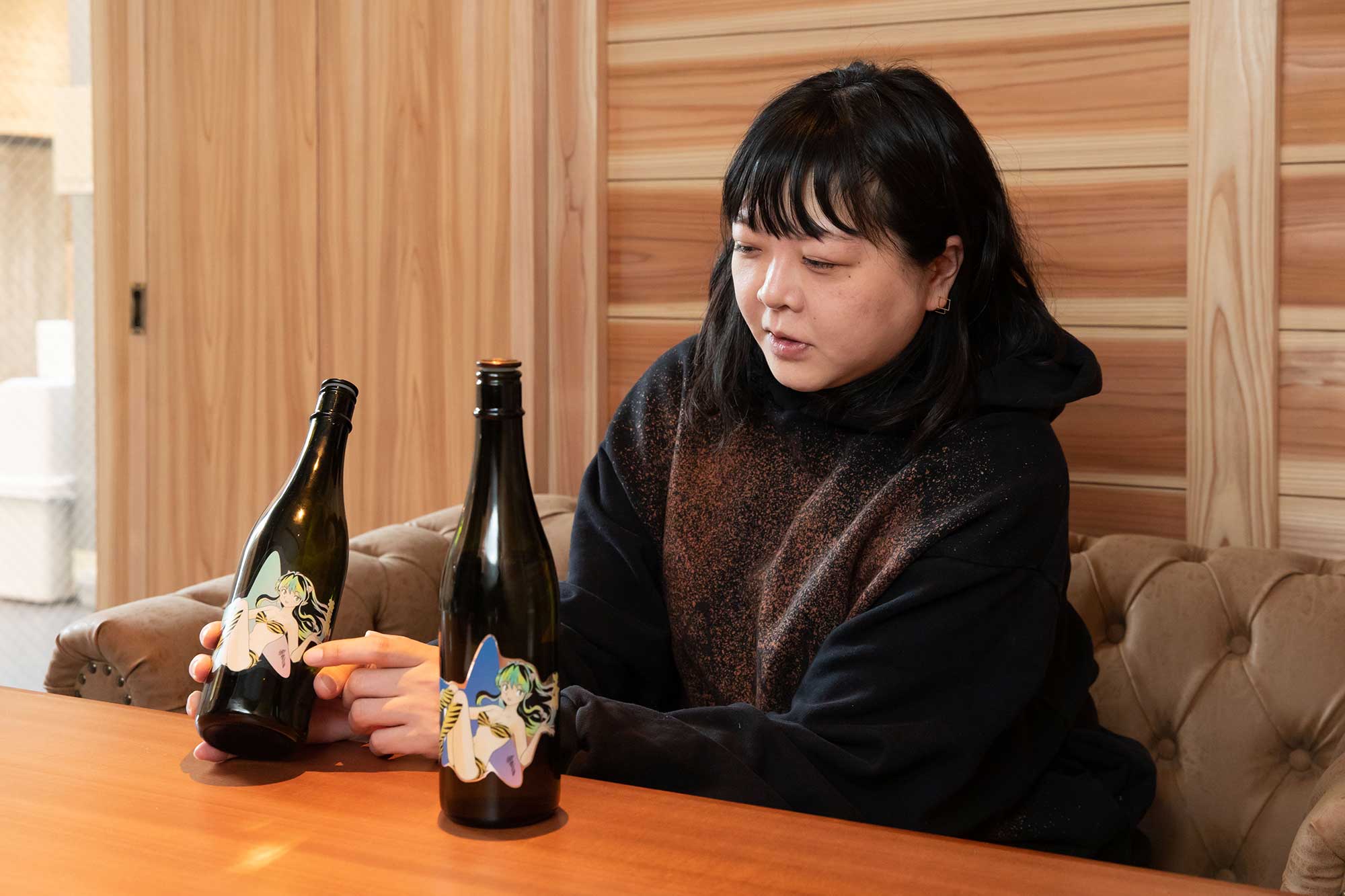
The underlying idea is the desire "for even people who are not usually interested in sake to enjoy it." Sake drinkers make up less than 10% of the total alcoholic beverage market share. Wanting to change this situation, I have launched several projects in the past, but I came to feel that "to generate explosive power, it is necessary to form a team and get the message out." At that moment, Fukushima came to mind. For Fukushima's sake, the taste is of course exceptional, but the teamwork among the brewers is also significantly stronger than in other regions. So, after consulting with brewers I had connections with, the project came to life with four breweries: 'Sharaku,' 'Hirotogawa,' 'Sasamasamune,' and 'TENMEI.' For the label, I asked Ms. Rumiko Takahashi, who wrote a recommendation for my first book, to create an original drawing of Lum, the heroine from 'Urusei Yatsura.'
*A project planned by sake sommelier Marie Chiba and sake coordinator Hiroyuki Yamaguchi, two sake communicators, to promote the appeal of Fukushima Prefecture's sake.
――― What do you like about Fukushima's sake?
The recent trend in sake is to emphasize individuality through things like brilliant aromas and acidity. In that context, what I like about Fukushima's sake is that while it may not be flashy, it is gentle and allows you to experience the natural sweetness of the rice. I believe that sake is a beverage that reflects the personality of its brewer. I have had a deep connection with Fukushima since my university days, and I feel that its characteristics—not being overly assertive, but gently complementing and embracing—reflect the climate and the disposition of the people of Fukushima. It pairs wonderfully with food, and I think of it as "sake that gently complements" a wide variety of dishes and ingredients.
――― Are there any breweries that you are particularly focused on?
That would be Akebono Shuzo and Sasamasamune Shuzo. Mr. Koichi Suzuki, the owner of Akebono Shuzo (the brewery for TENMEI), and I are the same age, and we have been good friends since more than 10 years before I even started my career in sake. TENMEI has now become one of Fukushima's representative sakes, but for me personally, it feels like a companion with whom I've grown together. With that sentiment, I continue to support them. As for Sasamasamune, I had been drinking their sake on occasion for a while, but to be honest, it never really stood out to me. However, in the last few years, the taste has become truly excellent. In my experience, the quality of sake often improves dramatically the moment the brewer's own passion aligns with the passion of the rice farmers and others involved. These are the breweries I am paying the most attention to right now.
――― Could you tell us about a dish (pairing) you would like to have with Fukushima's sake?
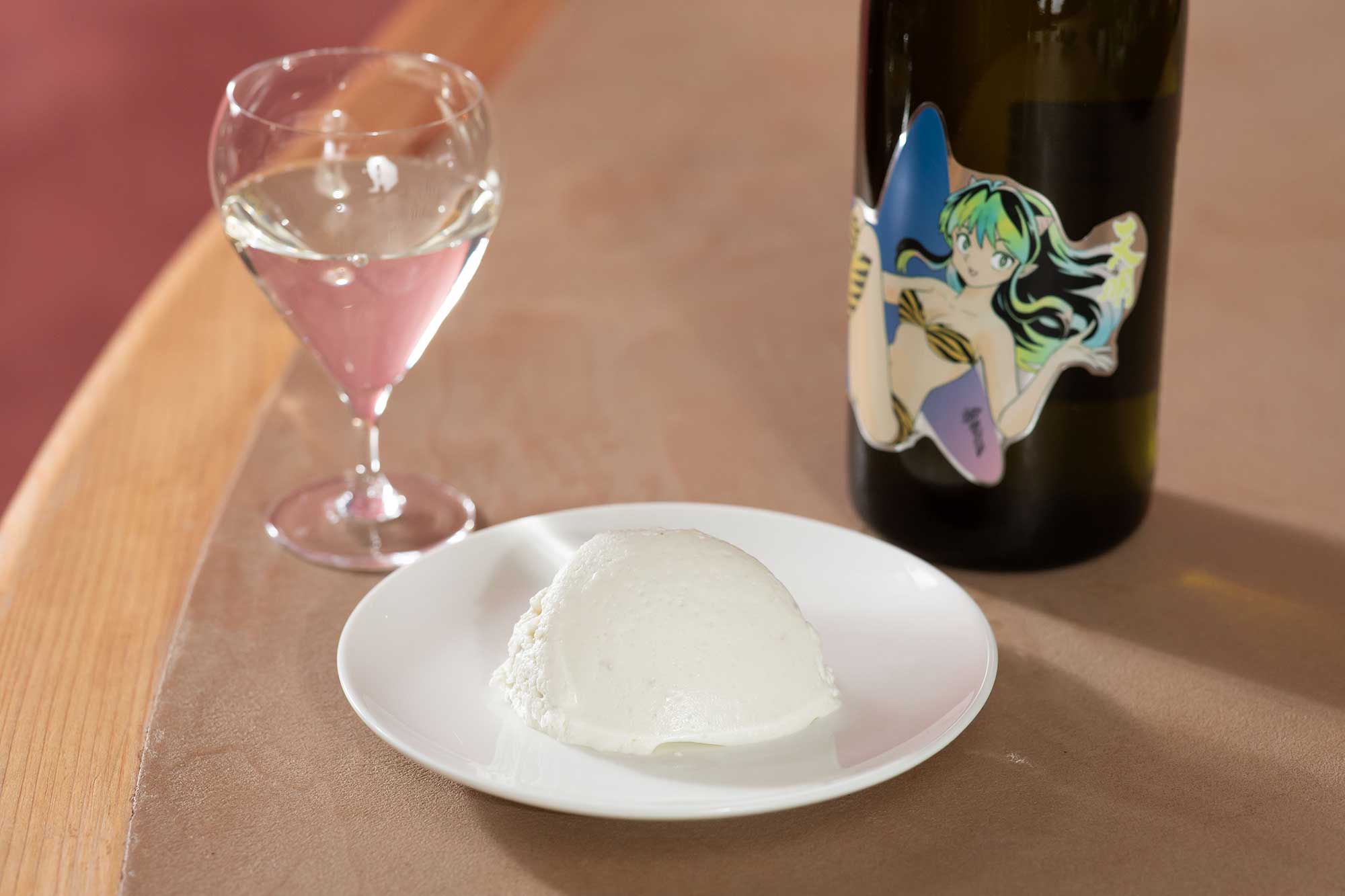
【TENMEI x Gorgonzola Mousse】
This TENMEI is a blend of a four-year-aged sake and a sweet sake called kijoshu. Kijoshu is a type of sake made using sake in place of some or all of the brewing water, resulting in a luscious, sweet, and rich flavor. By blending in a small amount of aged sake, the sweetness and richness (koku) are well-balanced. The dish for this pairing expresses the "softness" of the kijoshu through the texture of a mousse, and the "strength" of the aged sake through the powerful aroma and richness of Gorgonzola cheese. When you pair "food with a strong personality" with "sake with a strong personality," you can discover new aromas that you wouldn't notice from the dish alone, or on the contrary, a strong characteristic can be beautifully smoothed out. This is a combination that allows you to enjoy the true pleasure of pairing.
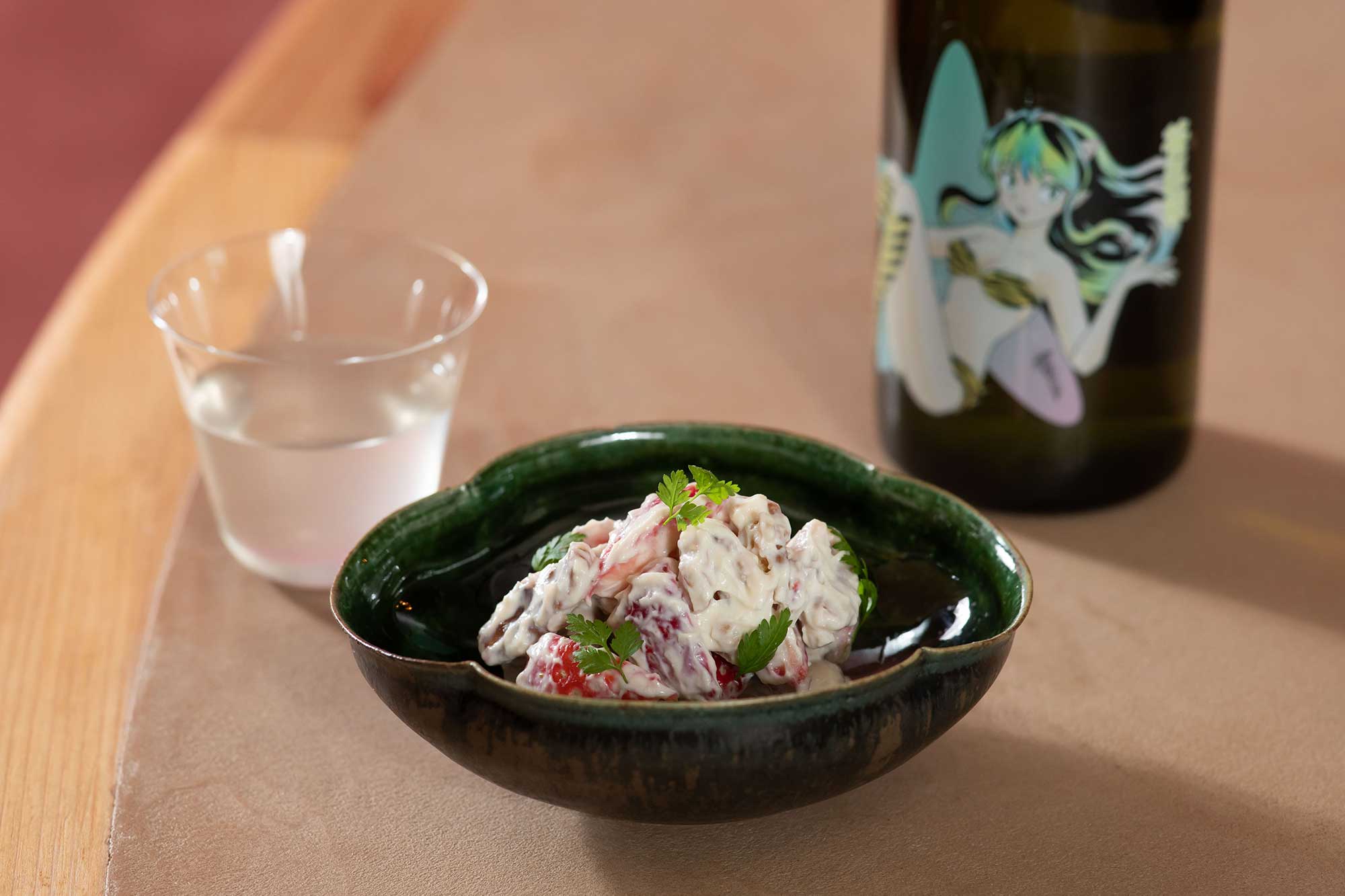
【Sasamasamune x Strawberry and Walnut Shira-ae】
This Sasamasamune is a kijoshu namazake (unpasteurized noble-brew sake). It is characterized by being sweet, light, and fresh. While the image of 'sake means dry' has become common recently, I chose this with the hope that people trying sake for the first time will learn that 'sake can also be this sweet, refreshing, and easy to drink.' This sake is purely sweet compared to TENMEI, so I felt the accompanying dish needed some acidity, which is why I chose strawberries. The acidity of the strawberry lightens the sweetness, while the bitterness, astringency, and texture of the walnuts add a calming element. And by making it a shira-ae (a dish dressed with tofu), it brings all the components together. Although I used strawberries this time, I think it would be enjoyable to try it with various other fruits depending on the season, such as figs or Shine Muscat grapes.
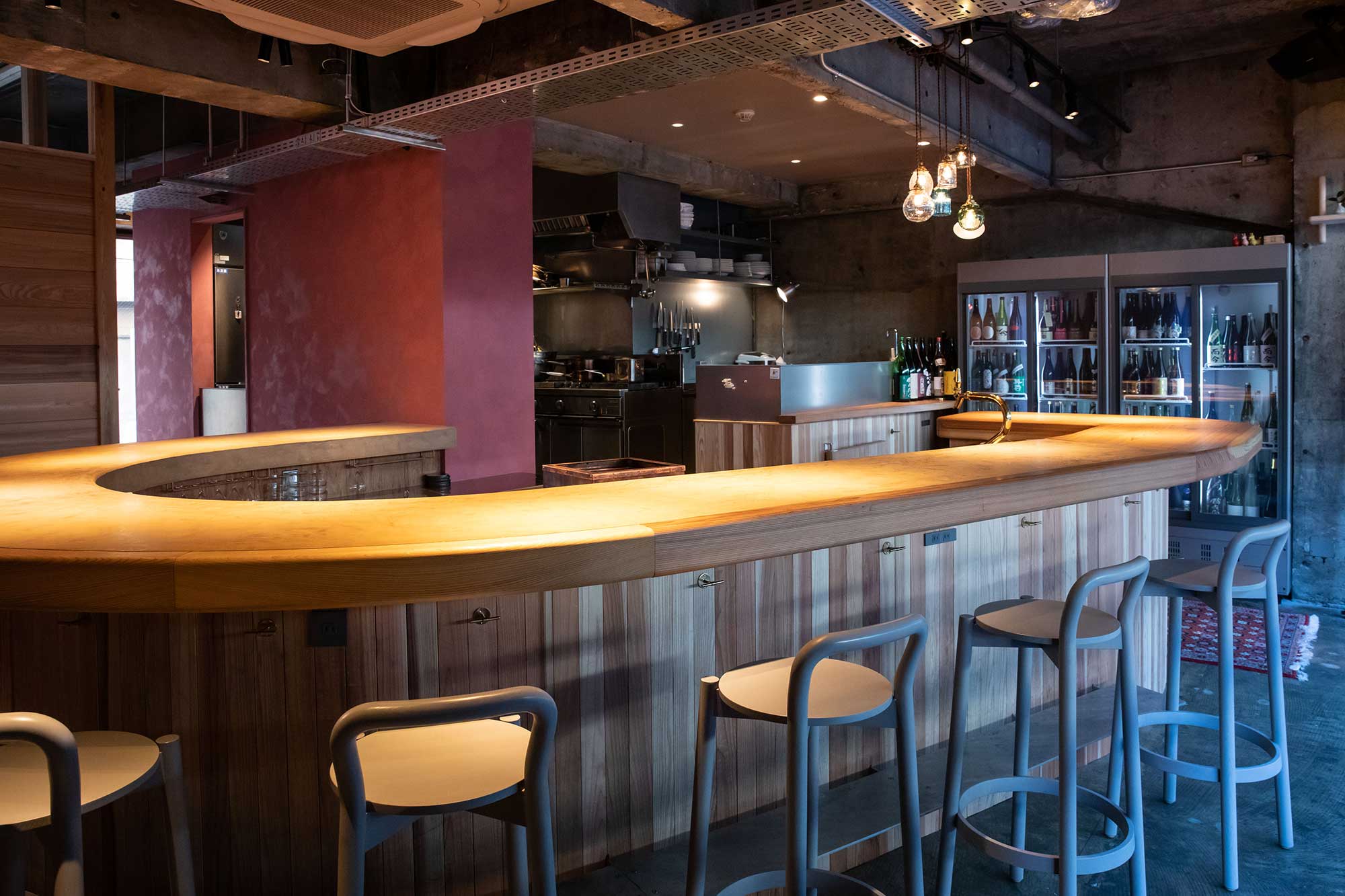
――― Could you please tell us about the concept and recommended points of "EUREKA!"?
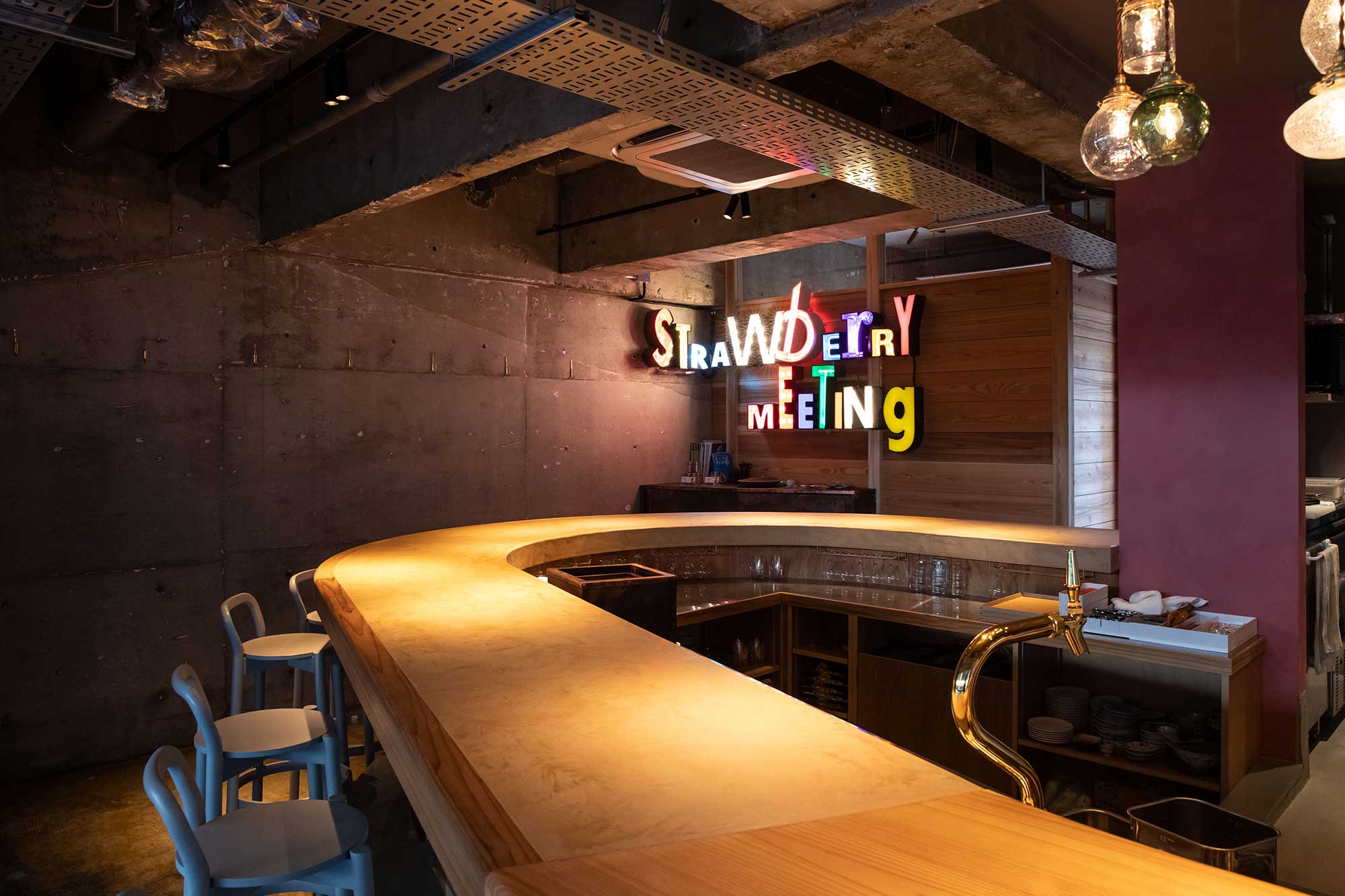
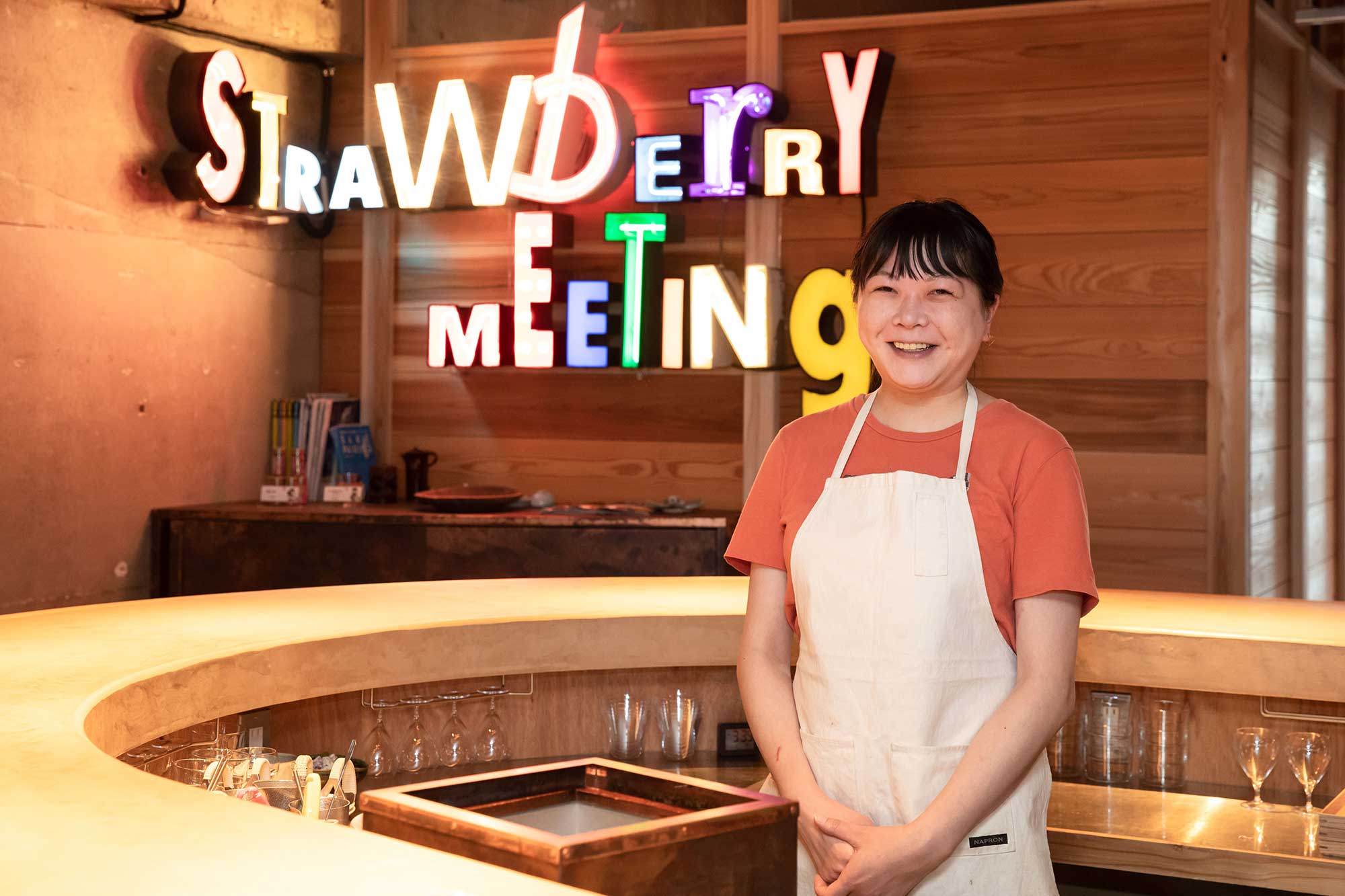
The store's name, "Eureka," is a Greek word meaning "awakening" or "discovery." I named it with the hope that people will experience many awakenings and discoveries while enjoying sake and food pairings at this bar. We stock around 300 types of sake at all times, from about 30 different breweries. I have personally visited every brewery, tasted their sake, and only selected the brands that I was truly satisfied with. Inside, there's a neon sign that says "Strawberry Meeting," which represents the Japanese concept of ichigo ichie (a once-in-a-lifetime encounter). I hope that in the time you spend here, you will enjoy all kinds of unique encounters—with the people sitting next to you, with new sakes, and with new sake and food pairings.
――― For those who are not strong drinkers, could you give us some tips for enjoying sake without it lingering the next day?
First, "drink the same amount of water as the alcohol you consume." When drinking water, I recommend hot water (sayu) rather than cold water. This is because introducing liquid that is close to your body temperature helps your body to break down the alcohol more easily. This is just advice from my own experience, but I also feel that warm sake (kanzake) is less likely to leave you with a hangover. It's also important to "eat while you drink." In my case, if I eat things like tofu or edamame while drinking, I can get through the next day feeling refreshed.
――― Do you prefer drinking out or drinking at home? Please tell us about any recommended spots.
I used to be completely in the "drinking out" camp and never drank at home, but I discovered the joy of drinking at home during the period we were forced to close due to COVID. When I make food or snacks, I enjoy experimenting and asking, "What would happen if I paired this with this?" Because it's food for myself, I can be bold and adventurous. During the pandemic, I developed new recipes, such as dishes using arranged convenience store items, and would post them on Twitter. The appeal of drinking at home is also that you can just lie down on the spot when you get tipsy (laughs).
――― What are your favorite snacks or pairings?
When I drink at home, I use powdered sansho (Japanese pepper) on almost everything. For sake, you can enjoy the aroma by sprinkling a little on usunigori (lightly cloudy sake that is bottled after pressing without filtration). For appetizers, you can create an exceptional dish just by adding olive oil and sansho, such as "Tofu x Olive Oil x Sansho" or "Cheese x Olive Oil x Sansho." It's also very versatile for cooking, working well with meat dishes, fish, and pasta. I definitely recommend that people try using sansho in their sake pairings.
――― Finally, could you please share a message of love for Fukushima's sake?
We collaborated with four breweries for this "FUKUSHIMA SAKE PROJECT," but there is still so much more delicious sake in Fukushima. You truly can't go wrong with any of them, so I hope that those who have never tried it will give it a taste. I believe you will experience a sense of surprise, thinking, "Wow, I didn't know sake could be this delicious!" Furthermore, Fukushima is a wonderful place with delicious ingredients like rice and vegetables, and a great ramen culture, so I highly encourage you to visit the prefecture.