
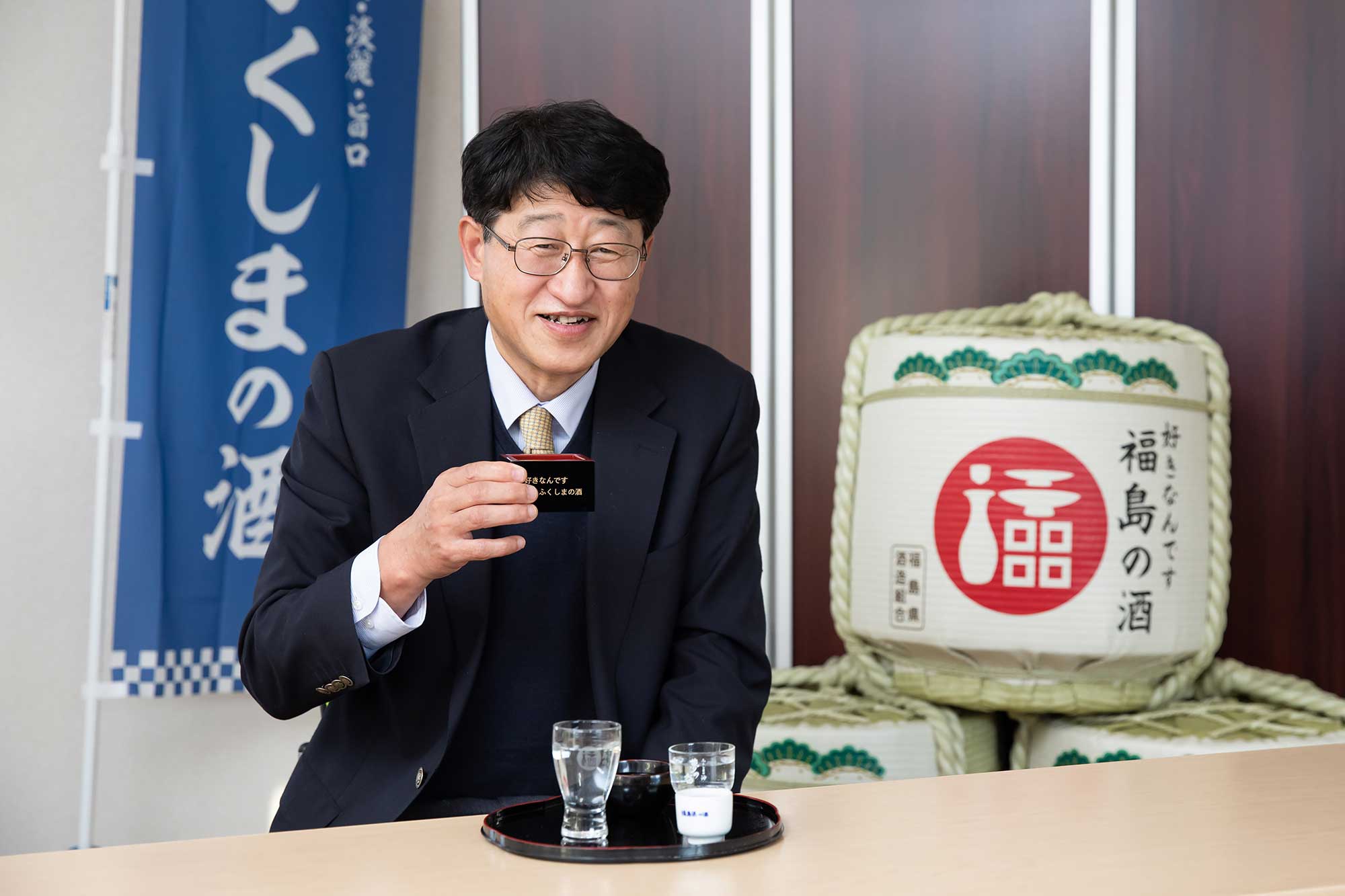
――― First, could you please tell us about your connection to Fukushima's sake?
My appreciation for the taste of sake began when I was a university student (Faculty of Agriculture, Iwate University) living in a dormitory. I was a picky eater back then and couldn't eat many things, like shiokara (salted fermented squid) or sea pineapple. However, I discovered that "sake makes food taste more delicious." After graduating, I began working at the Fukushima Prefecture Aizuwakamatsu Industrial Research Institute (now the Fukushima Technology Centre, Aizuwakamatsu Technical Support Centre). At the age of 30, I was put in charge of sake, and this marked the beginning of my journey with the sake of Fukushima. Ever since, I have worked hard alongside the brewery owners to improve the quality of Fukushima's sake.
――― What do you like about Fukushima's sake?
It is often described as rich, light, and flavorful, with a wonderful aroma, a light body, and a clean taste. Its appeal lies in being able to enjoy both the inherent flavor of the sake and a moderate sweetness. I believe that even those who do not drink much alcohol will find Fukushima's sake to be delicious. In fact, it is quite popular among women, who often say, "Fukushima's sake is easy to drink." I think a point of pride is that while each brand has a distinct personality, you can't go wrong no matter which one you choose.
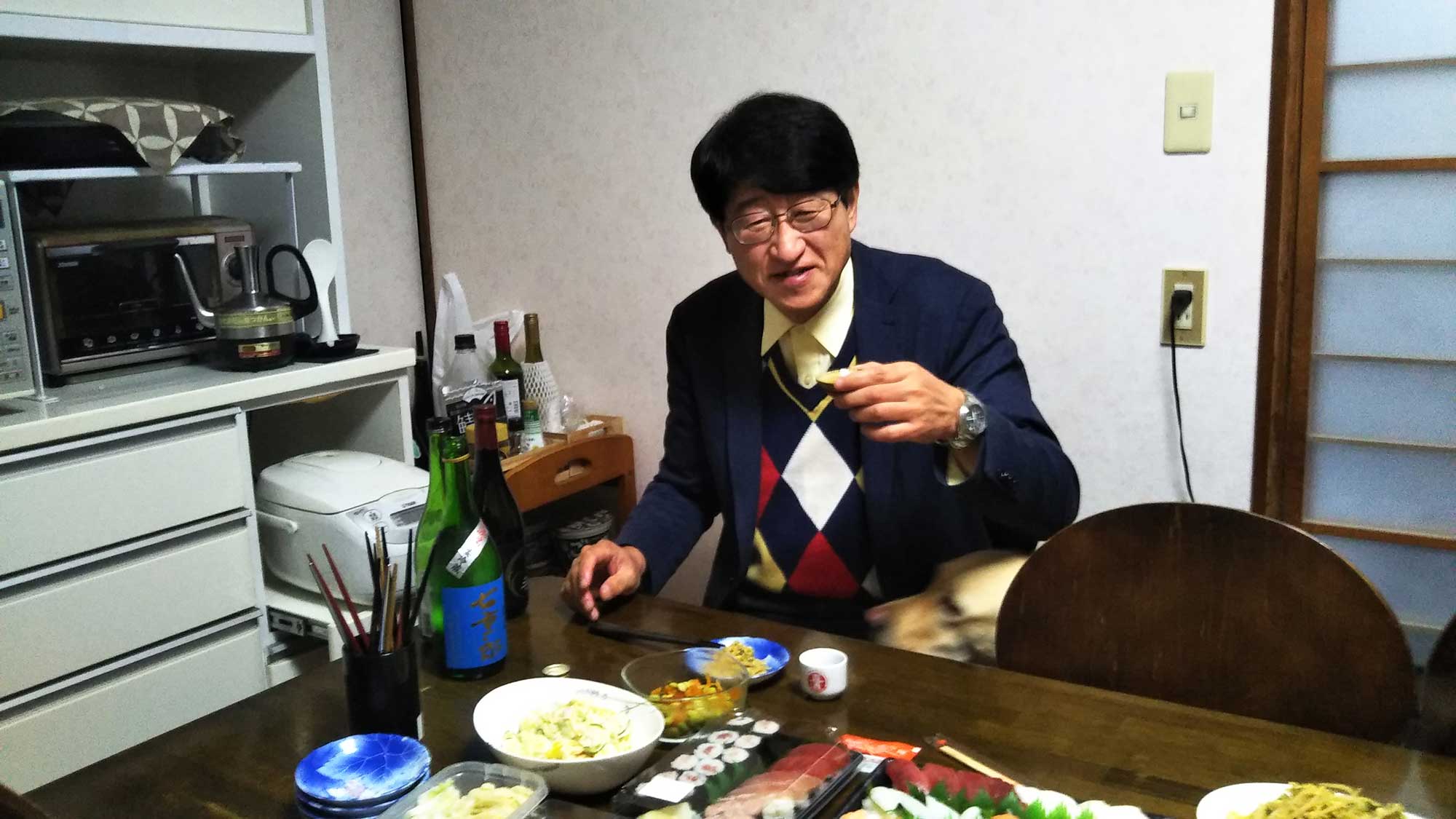
Mr. Suzuki enjoying a drink at home.
――― Do you prefer drinking out or drinking at home? Please tell us about your particular way of drinking.
When I was still working, I drank out and at home about equally. However, since my retirement in March of last year (2022), I find myself drinking at home more often. A wonderful thing about sake is the custom of sashitsu sasaretsu (pouring drinks for one another), which fosters natural communication. Lately, I enjoy an evening drink with my wife. My drinking style varies with the season. As it has gotten colder recently, I often have warmed sake (o-kan). I try to drink in moderation, but all of Fukushima's sake is so delicious that I end up finishing a 1.8-liter bottle in three days (laughs).

――― Do you have any favorite sake vessels?
With sake, there is often an image that drinking from a masu (a wooden box) is 'chic,' perhaps with a pinch of salt on the corner. It's true that sake contains glutamic acid, and adding salt creates the umami component sodium glutamate, so it can be helpful when you don't have any snacks (laughs). However, the thick rim makes it difficult to drink from, and with a plain wood masu in particular, the scent of the wood can overpower the aroma of the sake.
I prefer thin choko (small sake cups) with a wide mouth. I have a variety of sake vessels at home and choose one depending on my mood for the day. Last night, I drank from a tin (suzu) choko I received as a present. Tinware makes sake taste softer, so I think it's especially suitable for aged sake.

Abukuma no Koyo-zuke. Enjoy the smooth, rich texture of the raw salmon and the mellow aroma of the koji. (Photo courtesy of Fukushima Koyo-zuke Co., Ltd.)
――― What are your favorite snacks? Please tell us your recommended pairings.
The first thing I would recommend is Abukuma no Koyo-zuke. It's salmon pickled with koji and aged, and it's truly delicious and goes well with any sake. Next is Nishin no Sansho-zuke (herring pickled with Japanese pepper). People in Aizu usually eat it raw, but I prefer it lightly grilled. It pairs perfectly with sweet, aged types of sake. And then there's basashi (horse sashimi). In the Aizu region, basashi is always served with ninniku karashi miso (garlic chili Miso paste). To best enjoy this aroma, I would select a sake with a more subtle fragrance. Another favorite is atsuyaki tamago (thick rolled omelet), which I always order at an izakaya. A highly aromatic sake pairs well with it. A Daiginjo would be ideal, but if not available, I would enjoy it with a Junmai Ginjo that has a prominent aroma.
――― Finally, could you leave us with a "message of love" for Fukushima's sake?
In recent years, Fukushima's sake has consistently achieved high rankings at the Annual Japan Sake Awards. However, the definition of "delicious sake" that consumers seek changes with the times. I hope that everyone involved in brewing will remain sensitive to these changes and continue to explore new flavors. At the same time, while utilizing the brewing techniques they have honed for the awards, I hope they will also create "sake that is a part of everyday life." Sake is both my profession and my hobby, and I look forward to the continued creation of delicious sake from Fukushima in the future.